Hostile Architecture In North Carolina: From Spikes To Solutions
From bench dividers to ghost bus stops, this guide explains hostile architecture in North Carolina and offers practical, people-first fixes for public space
Author:George EvansFeb 04, 2026373 Shares23.3K Views
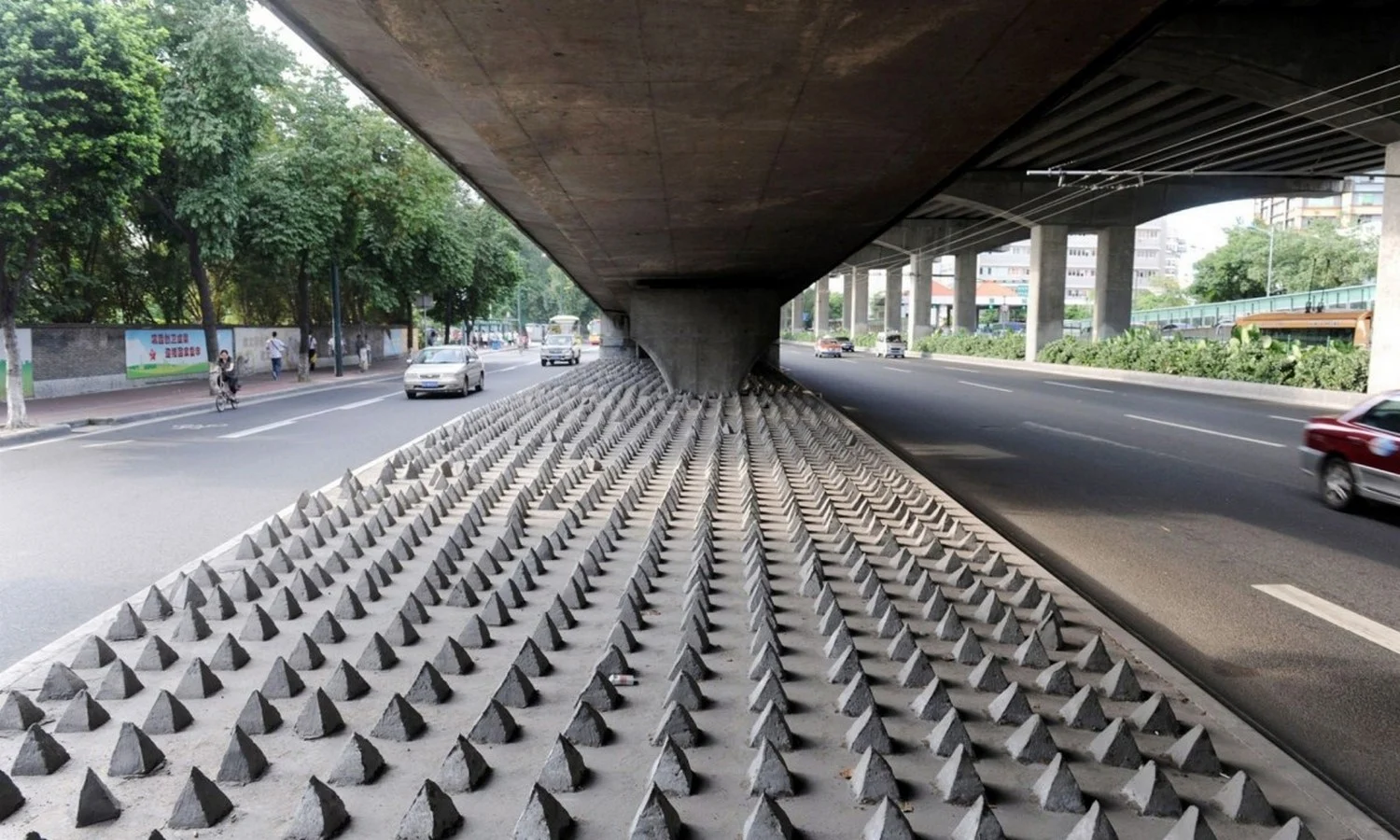
Safety Or Exclusion? The Rise Of Hostile Architecture In North Carolina
A person steps off a bus in Charlotte after a grueling ten-hour shift. The stop is a familiar sight: a lone metal pole, a parched patch of grass, and absolutely nowhere to sit.
Across town, a refurbished downtown plaza offers benches, but they are carved into individual steel ribs segmented so tightly that resting for more than a minute feels like a violation. Different sites, same message: move along.
In 2026, this topic has moved from a niche architectural debate to a statewide legal flashpoint. With the implementation of House Bill 781, the stakes of public design have never been higher.
What used to be a local choice about aesthetics is now a front line for municipal compliance, public health, and civil rights.
Key Takeaways: Defensive Design In NC
- Hostile architecture is a design that discourages certain behaviors by making spaces uncomfortable or unusable.
- In North Carolina, it most often appears in downtown edges, storefront alcoves, and transit stop places under pressure to reduce complaints and loitering.
- The effects are rarely targeted in practice: disabled people, older adults, transit riders, and families can be hit by the same design constraints.
- Design-only deterrence tends to displace problems rather than solve root causes; stronger approaches pair inclusive design + operations + services.
- Local policy signals matter. Boone’s resolution opposing anti-homeless architecture shows how a town can set norms before projects break ground.
What Hostile Architecture Means And What It Doesn’t?
You’ll get the most value from this section if you leave with a definition you can actually apply in the field and a way to avoid mislabeling normal safety or accessibility choices as hostile.
Hostile architecture: built features that restrict comfort or usability to deter certain behaviors (often resting, sleeping, or gathering).
Encyclopaedia Britannica describes it as a design intended to prevent behaviors such as sleeping in public spaces.
Defensive Design, Exclusionary Design
You’ll also see related terms used alongside hostile architecture. Defensive design is the more neutral umbrella label that many planners and property managers use.
Exclusionary design puts the focus on who gets pushed out, whether that outcome is intentional or not. Anti-homeless architecture is a common phrase when the intent or effect specifically targets sleeping or resting in public space.
A useful rule:defensive names the strategy; hostile names the experience.
The Intent Vs. Impact Test
Here’s a practical way to evaluate a feature without mind-reading the designer. Start by asking what basic human needs the element limits resting, leaning, sheltering from rain, or waiting safely.
Then ask who loses usability first, such as people with fatigue, mobility limits, or nowhere else to go.
Finally, consider whether there’s a less exclusionary path to the same goal, like operations, maintenance, visibility, outreach, or better seating layouts.
If the feature primarily works by removing comfort and predictable groups lose access first, you’re likely looking at hostile architecture.
Illustrative Scenario: Two Benches, Two Very Different Outcomes
A city installs Bench A:a long seat with back support and armrests at the ends, comfortable for a wide range of bodies, harder to misuse without preventing rest.
Then the city installs Bench:aggressive seat segmentation every 18–24 inches, a steep seat pitch, and metal fins that punish leaning. Both benches reduce sleeping, but only one still supports legitimate public use.
Takeaway:Don’t argue about labels first; evaluate function, impact, and alternatives, then you can talk about intent with credibility.
Beyond The Bench: The Taxonomy Of Hostile Architecture
Understanding the taxonomy of exclusion is essential for recognizing how design shapes our movement through North Carolina’s public squares.
Physical Deterrents: The Anti-Rest Infrastructure
These elements are the most common sights in North Carolina’s urban centers, designed specifically to limit the duration and type of rest a person can take.
Segmented Benches And Armrests
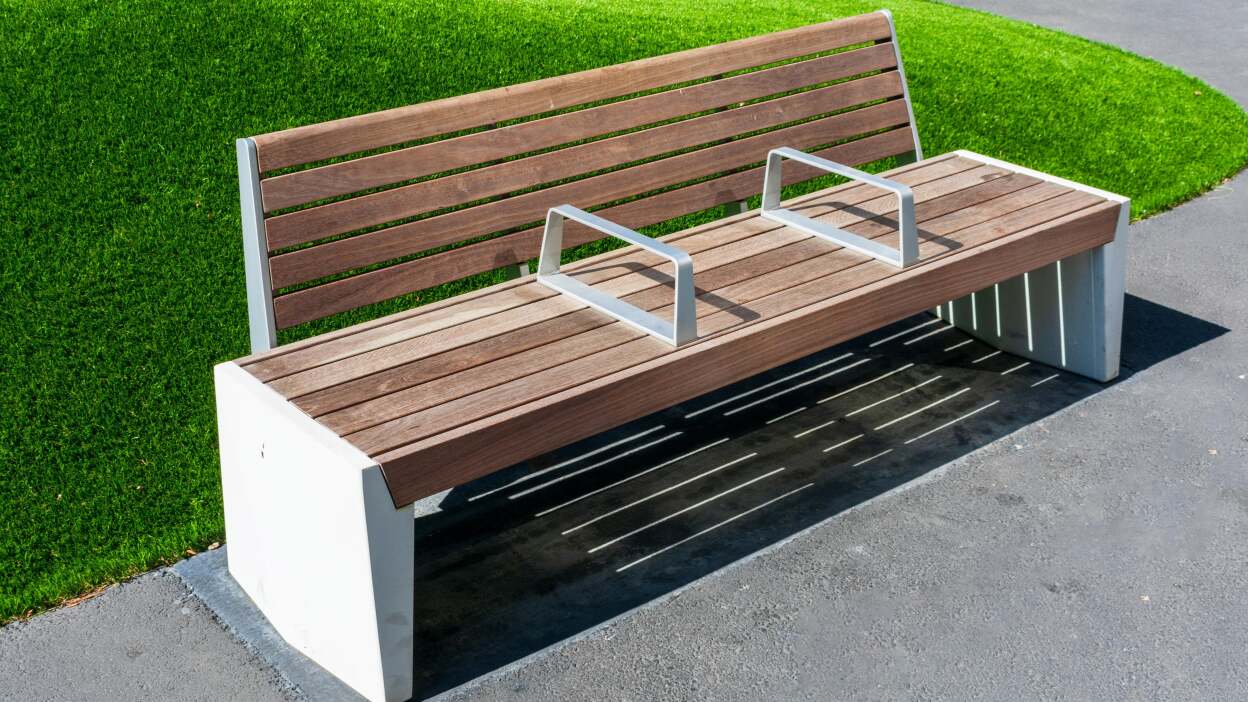
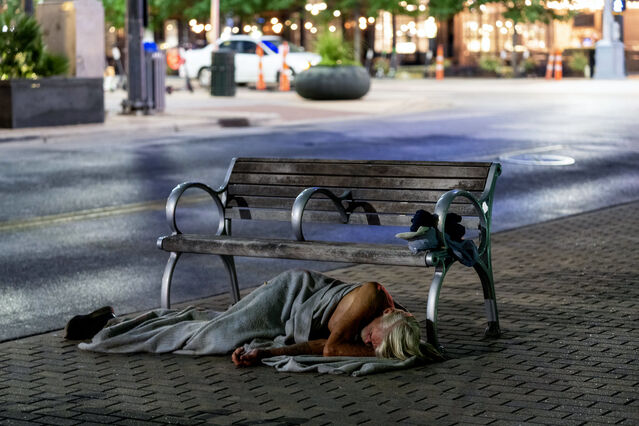
In parks like Moore Square in Raleigh, segmented benches are the standard. By installing central armrests, the designer effectively breaks the horizontal plane.
This prevents anyone from reclining, a move explicitly aimed at stopping the unhoused from sleeping, but one that also limits how families or couples can use the space.
Slanted Ledges And Leaning Rails
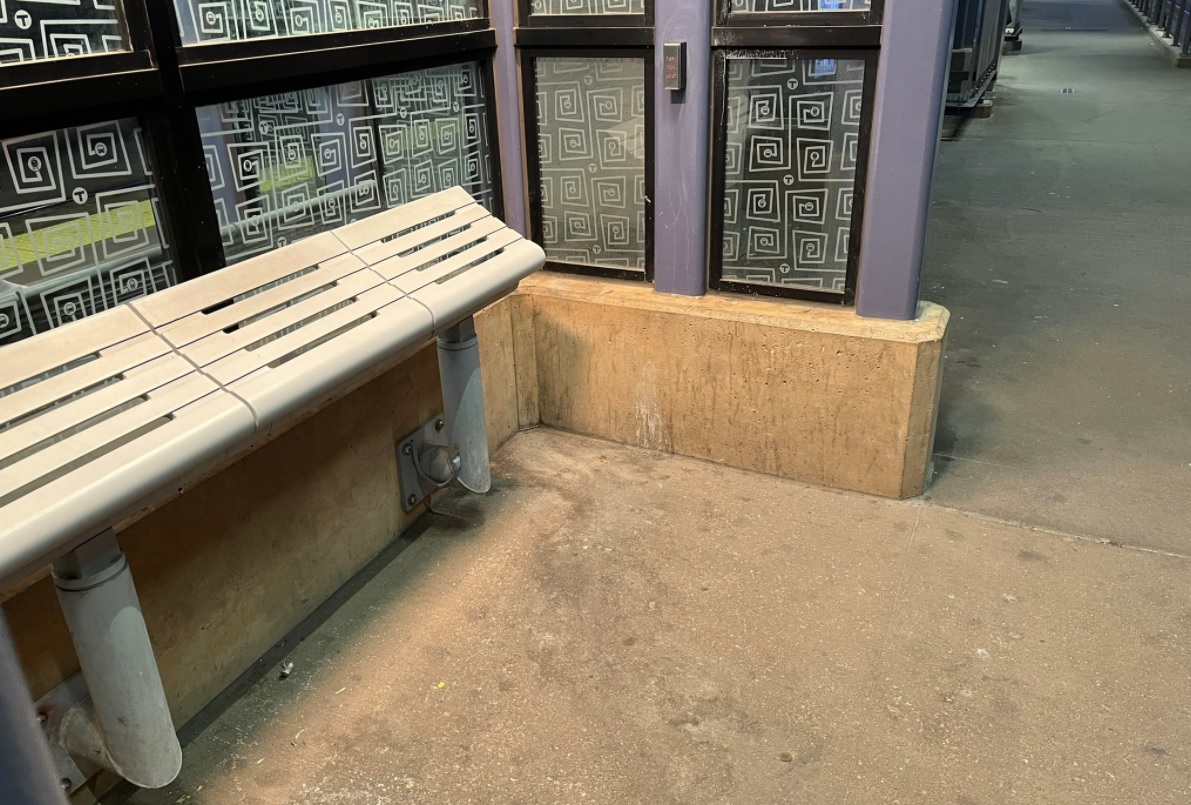
Walk through any major North Carolina transit hub, and you’ll see leaning rails. These are slanted metal bars placed at hip height.
They provide a place to rest your weight while waiting for a bus, but because they lack a flat seat, they ensure no one stays for long. They prioritize throughput over comfort.
Surface Spikes And Studs
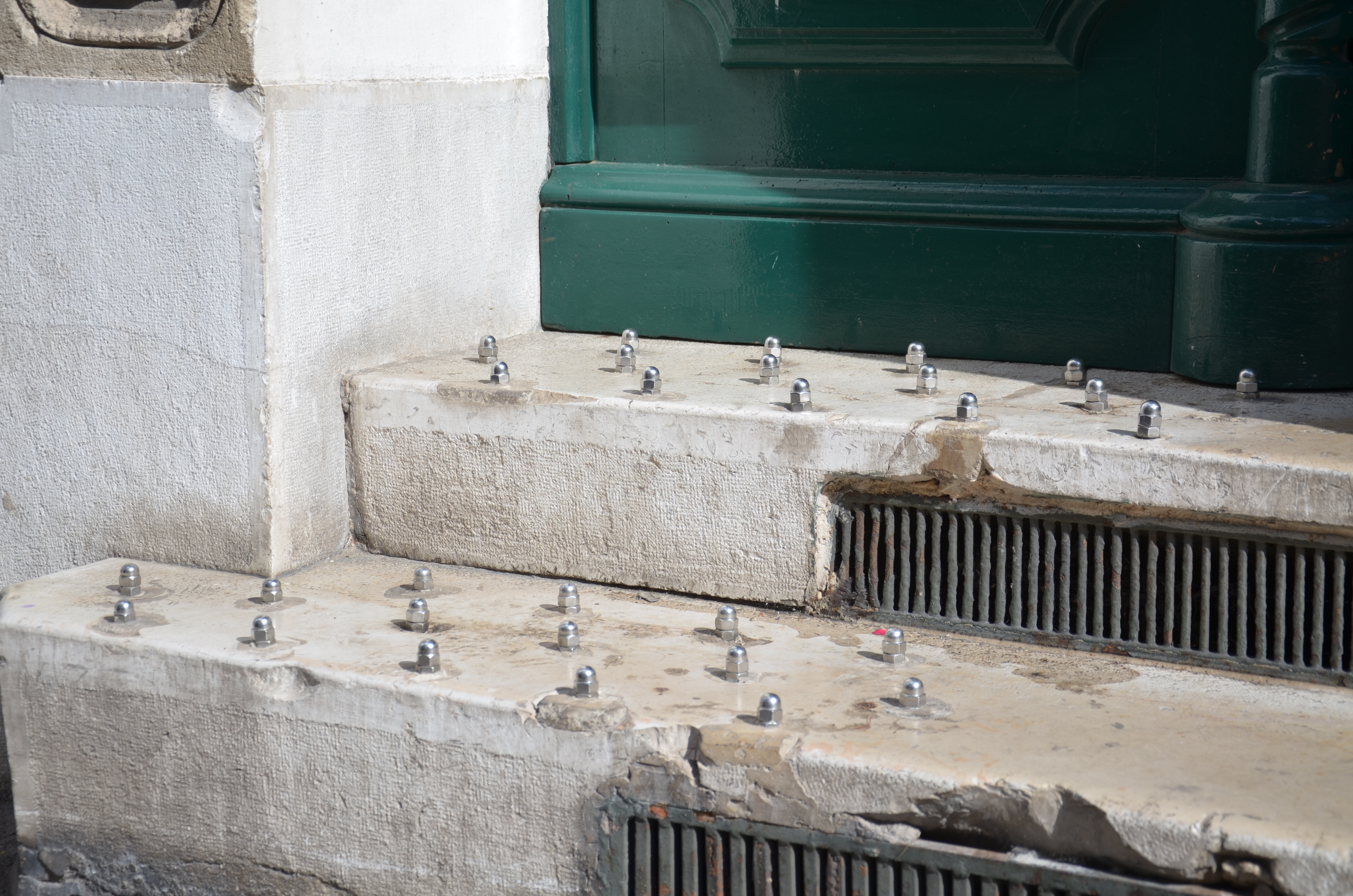
Common on private ledges in Uptown Charlotte, these metal protrusions (sometimes called anti-homeless spikes) make flat surfaces impossible to sit on.
They turn a potentially useful resting spot into a jagged, unusable edge, often under the guise of protecting the building's stonework.
Activity Deterrents: Curbing Skateboarding And Loitering
These modifications are designed to protect property from specific high-energy activities or to prevent groups from gathering in one spot.
Skate Deterrents
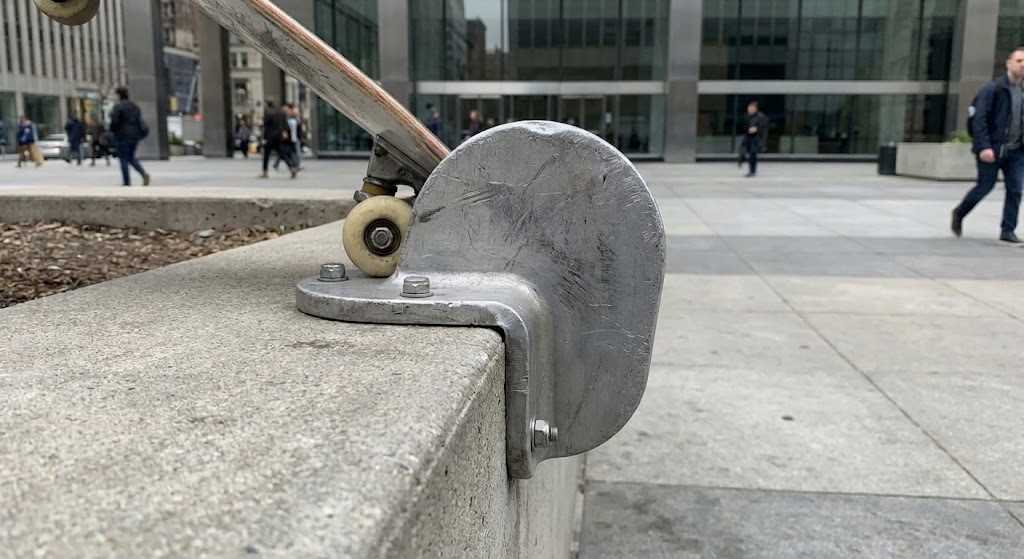
Commonly known as pig ears, these metal fins are bolted onto the edges of concrete planters and walls.
They are designed to interrupt the smooth grin of a skateboard. While they protect the architectural integrity of the stone, they also make the edge uncomfortable to lean against for any length of time.
Serrated Edges
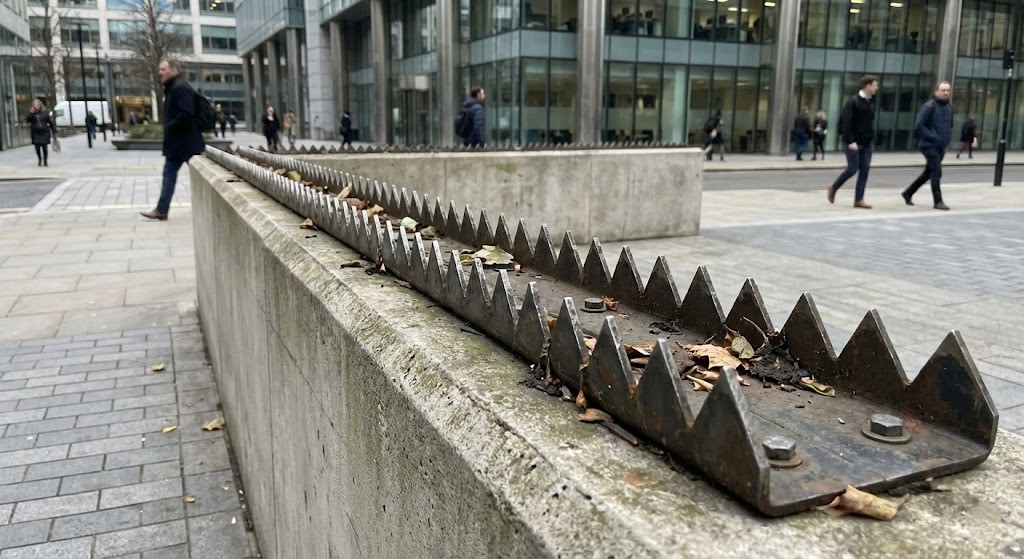
Some modern buildings in Durham and Greensboro use serrated or toothed metal edges on low walls.
These make the surface physically painful to sit on or even touch, effectively weaponizing the boundary of the property to keep people moving.
Sensory And Psychological Deterrents
Not all deterrence is physical. Some strategies try to make a place feel unpleasant to occupy by using sound, light, or atmosphere rather than spikes or dividers.
These tactics are widely discussed in the hostile design conversation, but they’re also the easiest to over-claim locally, because they’re often deployed privately, rarely advertised, and hard to verify without documentation.
High-Frequency Mosquito Devices
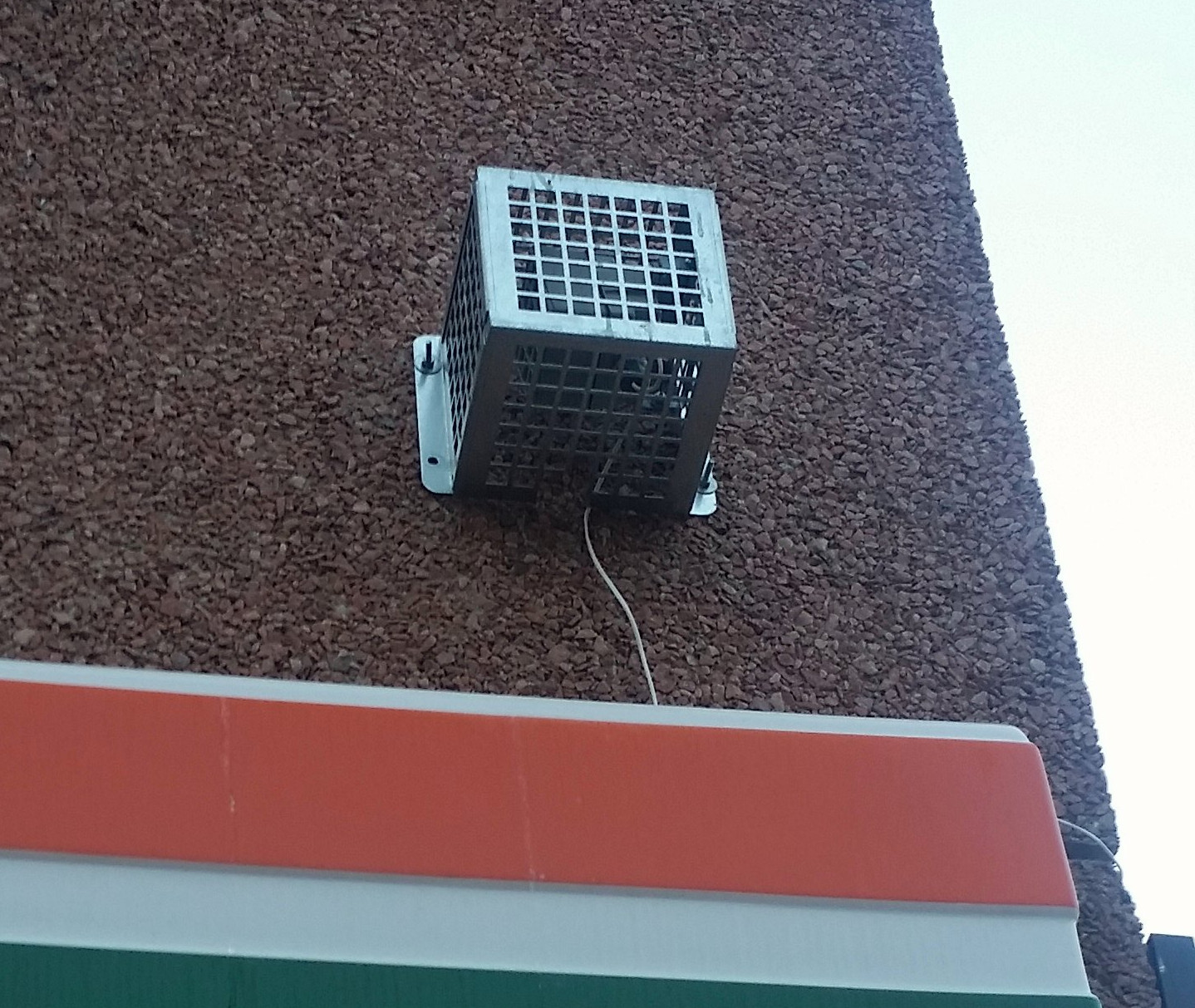
High-frequency sound emitters, often called Mosquito devices, are designed to be irritating (and sometimes only clearly audible to younger ears).
They’re frequently cited in reporting and case studies outside the U.S., and they appear in broader hostile design discussions as a tool some property owners can use to disperse lingering groups.
In North Carolina specifically, there may be anecdotes or suspicions about their use near private storefronts, but they are not consistently documented in a way that’s easy to verify across cities.
If you include this tactic in an NC-focused piece, frame it as seen elsewhere and occasionally alleged here, unless you can cite a specific, sourced local instance.
Why it matters even when intent is teen loitering:
Even when the stated goal is simply to discourage teen loitering, high-frequency sound deterrents can affect far more than the intended audience.
People with sensory sensitivities, as well as those who experience migraines or tinnitus, may find the sound painful or destabilizing.
The impact also spills over to people just passing through who didn’t choose to engage with the space at all, and it can be stressful or harmful for pets moving through the area.
How to document credibly:
If you suspect a high-frequency deterrent is being used locally, document it with the kind of detail that holds up under scrutiny: write down the exact location, the time of day, and whether the effect is consistent across repeated visits rather than a one-off.
Look for visible speaker placements near entries, soffits, or overhangs, and when possible, ask the property manager directly and keep a record of what they say.
If you need a higher standard of proof, work with someone who can measure frequencies with appropriate equipment; otherwise, frame your observation as unconfirmed and avoid presenting it as fact.
Colored Lighting And Clinical Atmospheres
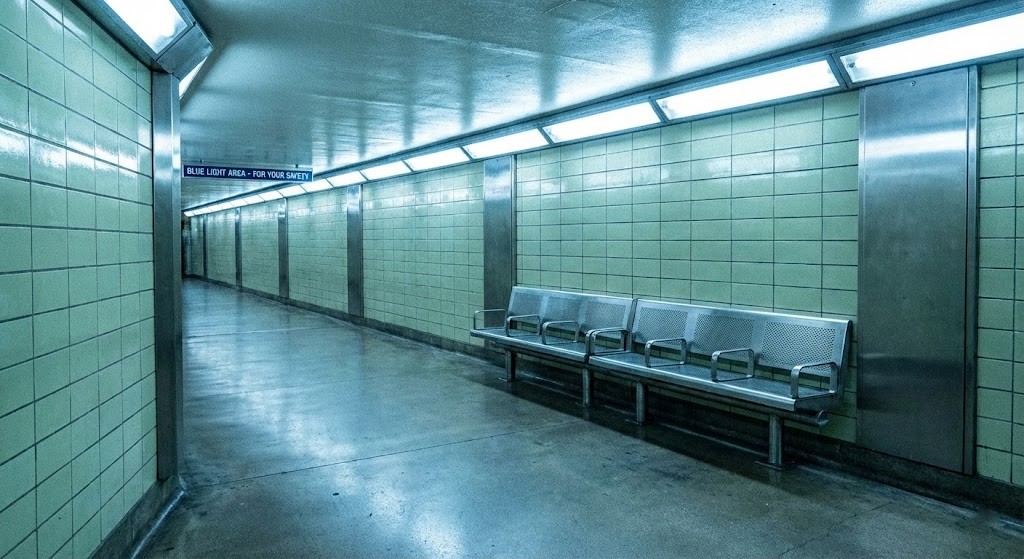
Colored lighting is another often-cited deterrent tactic, usually discussed in two forms:
- Blue lightis sometimes described as making it harder to locate veins, framed as discouraging injection drug use.
- Pink lightis sometimes used to make environments feel less flattering or more exposed, discouraging lingering.
Important nuance: these claims circulate widely, but the evidence for effectiveness is mixed and often anecdotal, and local usage can be hard to verify.
In an NC context, it’s safer to describe this as a known tactic in the broader hostile design toolbox rather than implying it’s widespread in specific NC cities unless you have confirmed examples.
Stealth And Environmental Hostility
The most sophisticated defensive designs are those that blend into the landscape, hiding their hostile intent behind an artistic or natural facade.
Defensive Landscaping
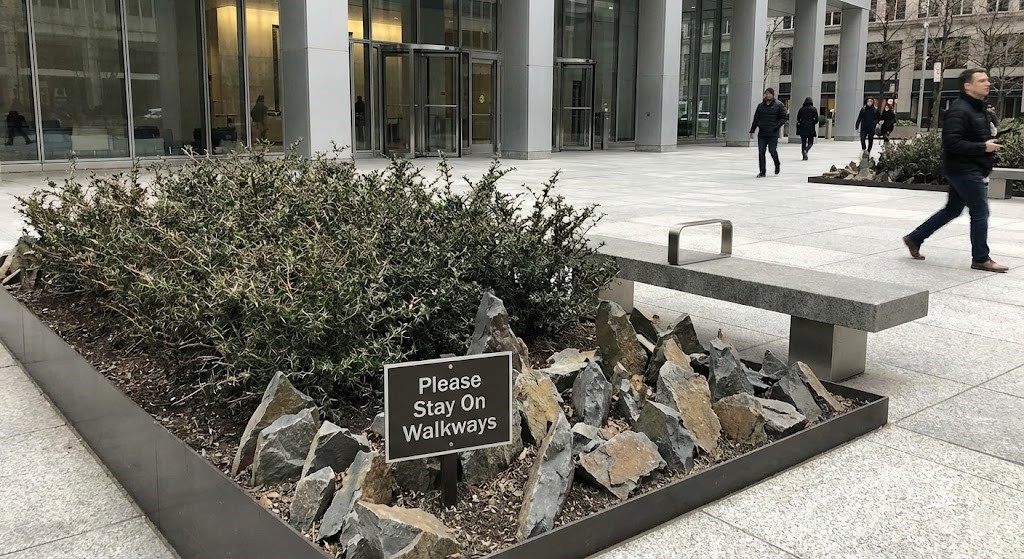
In many Raleigh developments, architects use aggressive greenery, such as thorny barberry bushes or dense, prickly shrubs, to block off alcoves or shaded areas.
It looks like standard landscaping, but it is strategically planted to prevent people from seeking shelter or privacy.
Artistic Boulders
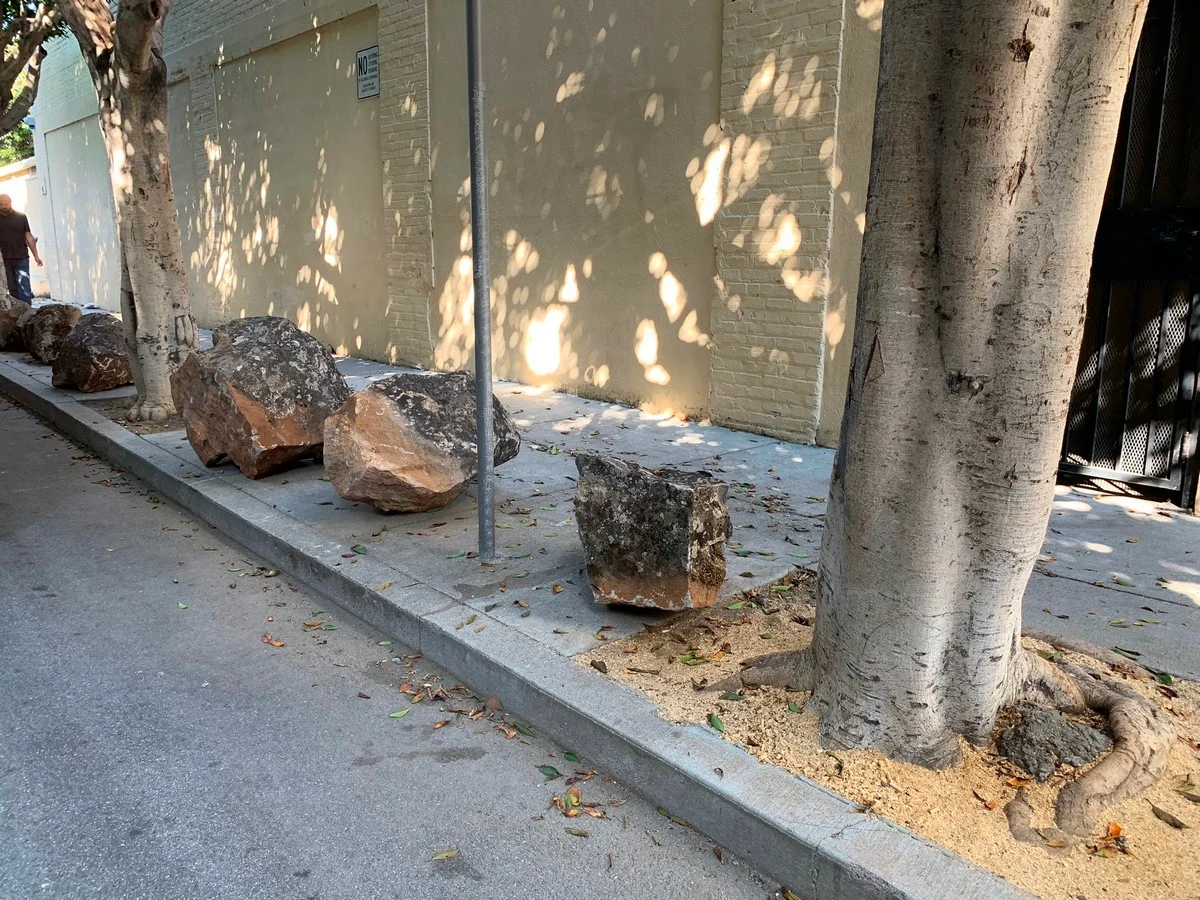
You may notice large, jagged boulders placed in dry, sheltered areas under skyscraper overhangs in Charlotte.
While they are framed as sculptural elements reflecting NC's natural beauty, their primary purpose is to take up square footage where a person might otherwise sit or sleep.
Ghost Amenities
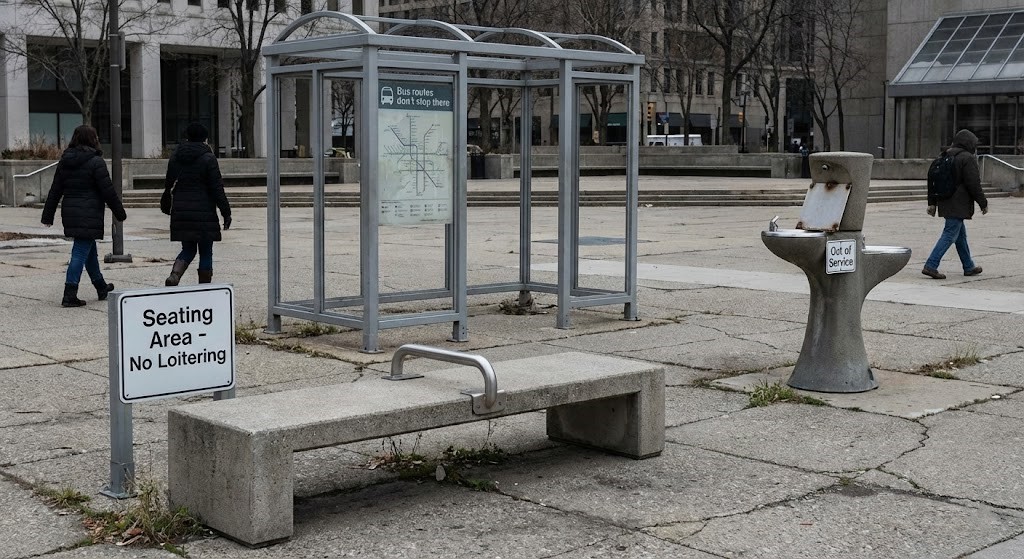
Perhaps the most hostile act is the removal of the infrastructure of care. Ghost amenities refer to the systematic removal of public water fountains, trash cans, and restrooms.
By taking away these basics, the city signals that the space is strictly for passage, not for lingering or community.
By breaking down these elements, we can see how architecture acts as a silent regulator of public life in North Carolina.
Hostile Architecture That You Can Recognize In North Carolina
This section gives you a practical, on-the-ground way to spot common hostile/defensive design patterns in NC cities without guessing motives.
You’ll also get a simple documentation method that holds up in real conversations with planners, property managers, and transit agencies.
Benches
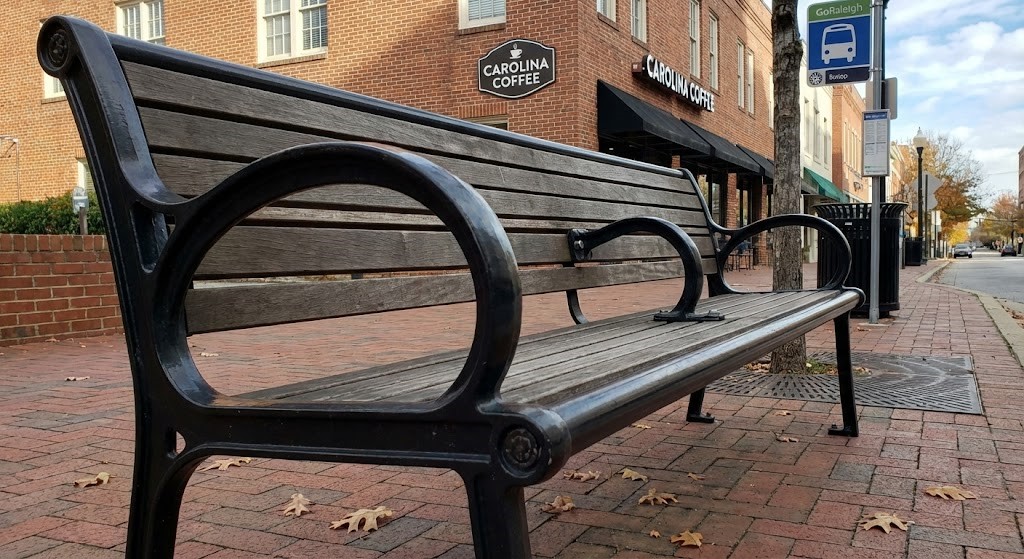
Benches are the most common signal object because they sit right at the boundary between rest as a public good and rest as a managed risk.
Britannica frames hostile architecture as design intended to discourage behaviors like sleeping in public spaces, and benches are often where that intention becomes visible.
What to look for in the field:
- Over-segmentation:dividers every seat-width (or tighter) that make any longer rest feel punished, not just discouraged from sleeping.
- Aggressive perch design:very shallow seating depth that prevents comfortable sitting for more than a short moment.
- Tilted or sloped seats:subtle forward pitch that forces constant muscle engagement (people slide rather than sit).
- Anti-lean geometry:backs or rails shaped to prevent leaning, especially at long-wait locations like transit corridors.
Illustrative scenario:A transit rider in Charlotte arrives 12 minutes early (common in real life). If the only seating is a sloped perch, the solution doesn’t just deter sleeping; it discourages riders who need rest from using the system at all.
Quick judgment test:If a bench design reduces comfort for everyone more than it reduces a specific misuse, it’s drifting from safety into exclusion.
Storefront Edges
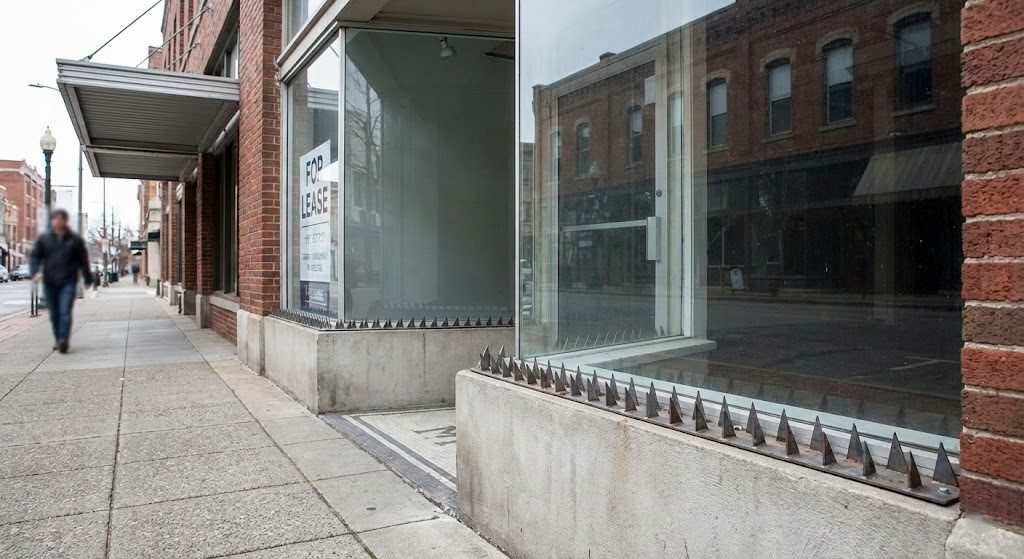
Storefront edges are where hostile architecture often becomes most explicit, because the goal is frequently to prevent lingering at thresholds: alcoves, recessed entries, windowsills, and loading-bay edges.
What to look for:
- Spikes/studs on ledges (sometimes sold as anti-sit devices).
- Sharp ribbing or roughened textures are designed to make sitting painful or impossible.
- Lean-only rails are positioned to remove flat surfaces that previously functioned as informal rest points.
Why this shows up in NC downtowns: redevelopment zones often increase foot traffic and complaint sensitivity. When publicness rises, so can pressure to keep edges clear, especially around nightlife and high-visibility retail corridors.
Design nuance:A safety-driven detail (e.g., preventing falls from a ledge) usually comes with guardrails, height changes, or clear hazard mitigation.
A discomfort-driven detail often looks like a retrofit: small metal elements added only where bodies tend to rest.
Sidewalk Management
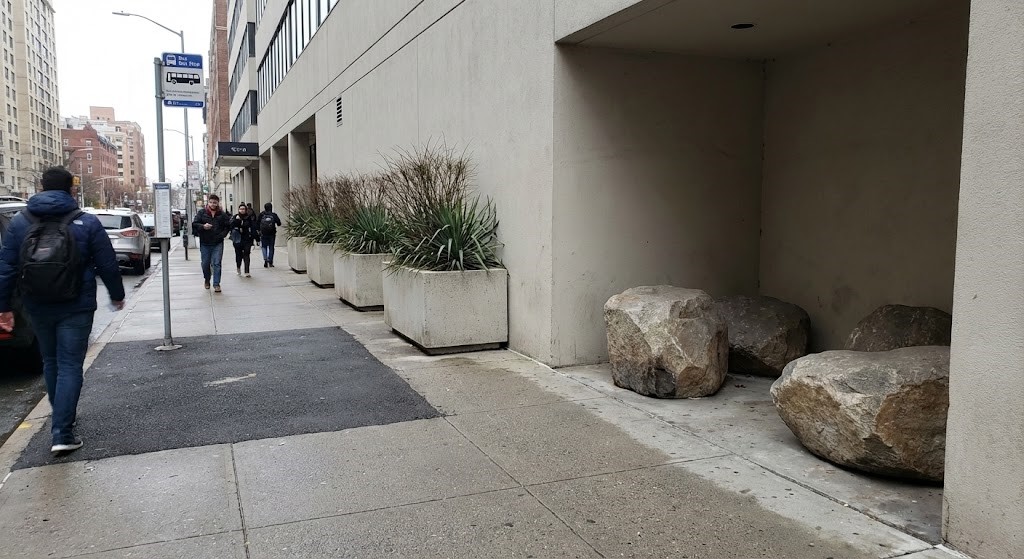
This is the category that confuses people most because it often masquerades as beautification or streetscape order.
What to look for:
- Planters/boulders are placed in linear patterns that reduce places to pause, sit, or shelter.
- Deliberate pinch points near walls or under overhangs where people would naturally wait out the rain.
- Narrowed clear paths that force constant motion and make stopping socially incorrect.
- Ghost amenities at transit stops: a stop marker with no bench, no shelter, and no pad, technically a stop, functionally a deterrent for waiting.
Accessibility reality check:When sidewalks or stop areas are narrowed, the impact isn’t abstract; it can conflict with accessible circulation and usable waiting environments.
ADA guidance and standards matter here because accessibility isn’t just a ramp; it’s use over time.
Illustrative scenario:A parent with a stroller and an older adult both approach a stop. The design doesn’t target homelessness, but it still excludes legitimate users by removing the ability to pause safely.
Anti-Skate Measures And Youth Displacement
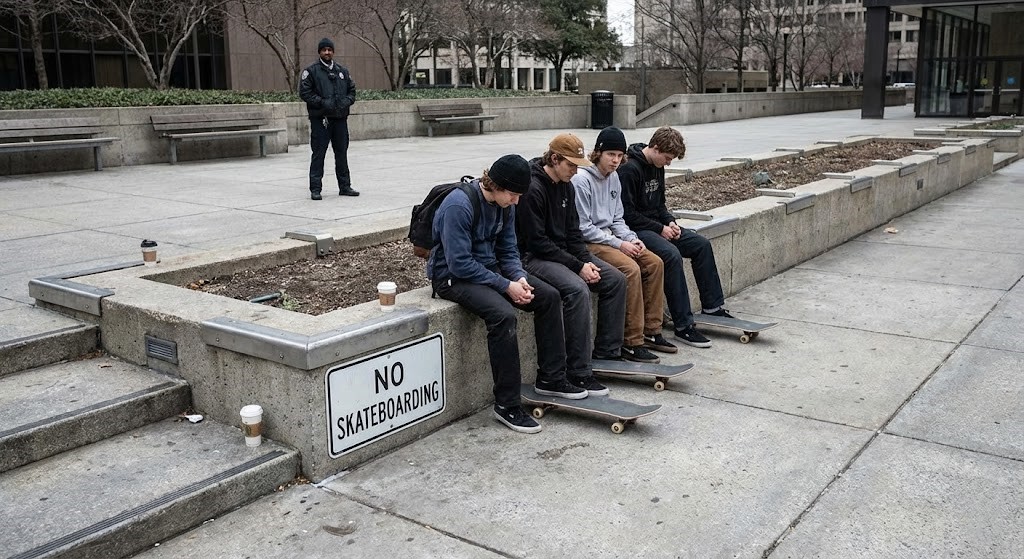
Anti-skate design sits in a gray zone because it can address real property conflicts (damage, noise, collisions) and become a proxy for excluding youth presence altogether.
What to look for:
- Skate-stoppers on edges that double as sitting space, turning a ledge into a no-body zone.
- Over-application across an entire plaza so there’s no legitimate hangout or resting surface left.
- Hostile messaging by design: a space that technically exists but has no comfortable way to occupy it.
A fair way to frame it in NC contexts:
- If the space offers no alternative social area (no seating clusters, no designated skate features, no youth-oriented programming), anti-skate measures often function as youth displacement, not just skate deterrence.
- If there is a legitimate alternative (a designed skate element elsewhere, or seating designed to be sat on), the intervention can be less exclusionary.
Practical question:What behavior are we managing, and what legitimate behavior did we accidentally erase with the same detail?
What To Document: Location, Owner, Design Details, Who Is Impacted
If you want your observation to be taken seriously, document it like a designer, not like a takedown post.
A simple documentation template:
- Location:address/intersection, plus a wide photo showing context.
- Ownership/agency:city, transit authority, BID, private property owner (if visible on signage).
- Feature detail:close-ups of dividers/spikes/slopes; note materials and retrofits.
- Usability notes:Can someone sit comfortably for 10–15 minutes? Can someone with limited mobility rest and stand again?
- Who is impacted:name at least 2–3 user groups (older adults, disabled people, transit riders, parents, unhoused residents).
- Nearby alternatives:nearest seating/shelter; whether it’s visible, accessible, and safe to reach.
Optional (high credibility add-on): Document time-of-day and weather context. A ledge deterrent reads differently in a sunny plaza than during a storm, when it becomes the only dry edge.
A Tale Of Three Cities: NC’s Geographic Hubs Of Hostile Design
While the principles of defensive design are universal, North Carolina’s major metros apply them in ways that reflect their local identities and economic goals.
Charlotte: The Corporate Aesthetic Of Exclusion
In Uptown Charlotte, the architecture reflects the city's status as a global banking hub. Here, hostile architecture is often high-end.
You will find granite planters with built-in metal spikes and designer benches that are too narrow for comfort.
The goal is a sterile, pristine environment that caters to the professional commuter while subtly pushing the unwanted elements of the city out of sight.
Raleigh: Reimagining Public Space At Moore Square
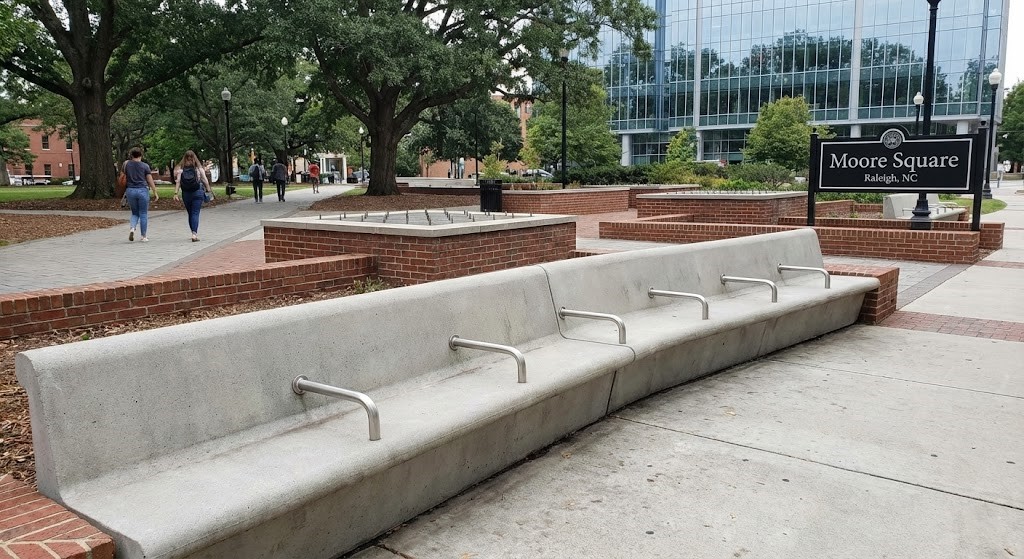
The renovation of Moore Square is a landmark case in North Carolina. While the park is objectively more beautiful and safer than it was a decade ago, the design is a masterclass in CPTED (Crime Prevention Through Environmental Design).
Every ledge is sloped, every bench is divided, and the wide-open sightlines are designed for maximum surveillance, leaving very few human-scale corners for quiet retreat.
Asheville: Tourism Vs. Accessibility
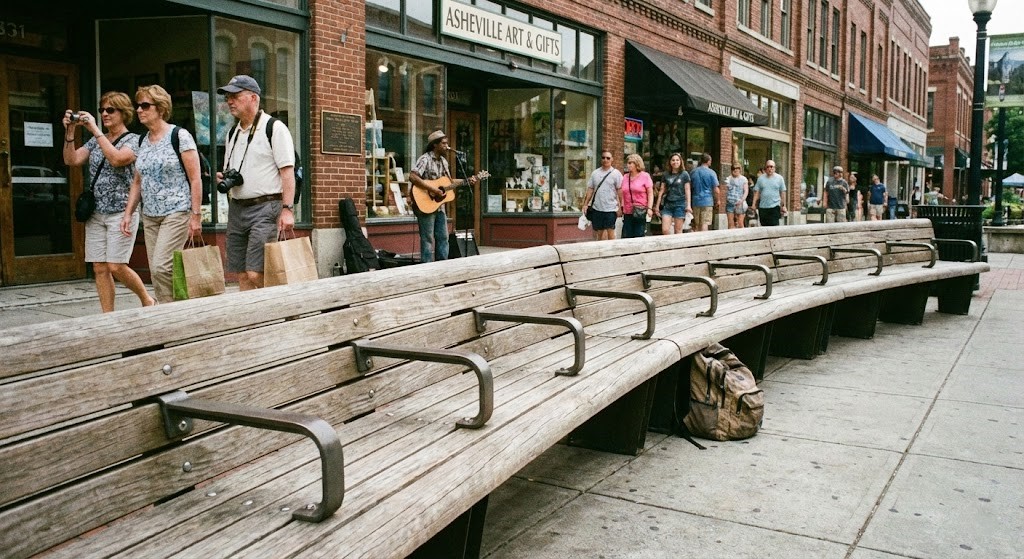
In Asheville, the tension lies between the city's bohemian brand and the pressure of heavy tourism. There has been significant local debate over the removal of benches in the downtown core.
By simply taking seating away, the city attempts to solve the problem of loitering, but it inadvertently makes the city less walkable for elderly tourists and residents with mobility issues.
While they removed benches, they are now seeing a rise in leaning rails, the ultimate half-measure that satisfies no one.
What To Build Instead: Parasitic Architecture Alternatives That Still Address Safety
This section gives you practical alternatives that respect real constraints: budgets, maintenance, and safety goals, without turning comfort into a privilege.
Universal Design As A North Carolina-Rooted Standard Of Care
North Carolina has a unique authority here: the Center for Universal Designat NC State helped shape the universal design movement associated with Ronald Mace.
Universal design reframes the question from How do we deter? to How do we serve the widest range of people safely?
Design + Operations + Services
A deterrence-only approach tries to solve a social and operational problem with a single objective. A more effective model combines three layers. Design covers seating, lighting, visibility, clear sightlines, and weather protection.
Operations include cleaning schedules, ambassadors, and clear rules applied consistently. Services mean outreach partnerships, housing navigation, and crisis response options.
Practical Alternatives: Seating Layouts, Lighting, Visibility, Maintenance Plans
Practical alternatives can reduce conflict without excluding basic rest. Use benches built for comfort with limited misuse, such as end armrests, adequate depth, and back support.
Choose distributed seating with many small clusters instead of one problem magnet. Add shade and shelter at transit stops to improve rider comfort and reduce informal congregation in doorways.
Support it with CPTED-aligned lighting and visibility, not punitive cues. Finish with maintenance-by-design using durable materials that stay cleanable without relying on discomfort.
Inclusive Urbanism: The North Carolina Alternative
The shift away from hostile architecture is already beginning in certain pockets of the state. Forward-thinking NC planners are looking at inclusive urbanism as a way to revitalize downtowns without resorting to spikes and bars.
From Control To Community
Instead of designing to keep people out, we should design to bring people in. High-activity design involves adding more amenities, better lighting, more frequent trash pickup, and unrestricted seating. When a space is full of people eating lunch, playing chess, or reading, it becomes self-policing.
Local Success Stories
Places like Durham’s Central Park or Greensboro’s LeBauer Park showcase how Parasitic Architecture can work. These spaces offer varied seating options, ample shade, and public restrooms.
By treating the public with dignity and providing for basic human needs, these parks remain vibrant and safe without the need for defensive spikes.
By choosing inclusion, North Carolina can build world-class cities not just in their skylines, but in their humanity.
Learn More: Tadao Ando Architecture
Frequently Asked Questions
What Is Hostile Architecture?
Design features that discourage certain behaviors (like sleeping or loitering) by making spaces uncomfortable or unusable.
Is Hostile Architecture The Same As Defensive Design?
Often, yes, defensive design is a broader term; hostile emphasizes harmful impacts and exclusion.
What Are The Most Common Examples?
Segmented benches, spikes, sloped surfaces, skate-stoppers, and planters/boulders that block resting or sheltering.
Where Might I See Hostile Architecture In North Carolina?
Most often in downtown edges, transit stops, storefront alcoves, and areas under pressure to reduce loitering or camping.
Why Do Cities And Businesses Use It?
To reduce complaints, maintenance, and perceived safety issues, an environmental fix is preferred over staffing, outreach, or services.
Does It Actually Reduce Homelessness?
It typically displaces people to other areas; it doesn’t address housing or support needs, driving homelessness.
How Can I Tell Hostile Design From Normal Accessibility Features?
Look for elements that prevent basic resting (lying, leaning, sitting comfortably) rather than enabling safe use for diverse bodies.
Can Hostile Architecture Harm Disabled People Or Older Adults?
Yes, features that limit resting, shade, or navigation can disproportionately burden people with mobility, fatigue, or chronic pain.
Are Bus Stops Part Of This Conversation?
Yes, benches, shelters, and debates about publicness are central because transit users may need long, comfortable waits.
Is Hostile Architecture Legal?
Often legal, but legality varies by context; policy and civil rights considerations shape what agencies choose to build or prohibit.
How Did Grants Pass V. Johnson Change The Landscape?
The Court allowed enforcement of public-camping penalties under the Eighth Amendment analysis, influencing how cities regulate encampments and public space.
What Is North Carolina Doing About Public Camping/Sleeping?
North Carolina has debated measures such as HB 781, and local approaches vary; these debates can indirectly shape design and enforcement priorities.
What Are Better Alternatives That Still Address Safety?
Pair inclusive design (seating, lighting, visibility) with operations (ambassadors, cleaning, outreach) and services that connect people to housing pathways.
What Can Residents Do If They Notice Hostile Design?
Document the feature and impacts, identify ownership, ask for the rationale, and propose inclusive alternatives through planning boards, transit agencies, or council channels.
Is There Any NC Example Of Pushing Back?
Yes, Boone passed a local resolution opposing anti-homeless architecture as a preventive policy stance.
Conclusion
Hostile architecture is more than just a bench with an extra armrest; it is a physical manifestation of our social priorities.
As North Carolinacontinues to grow, we have a choice: we can build defensive cities that prioritize control and sterility, or we can embrace an inclusive model that welcomes all residents.
The next time you walk through Uptown Charlotte or Downtown Raleigh, look closely at the ledges, the lighting, and the planters.
Ask yourself if the space is inviting you to stay or telling you to move on. By recognizing these patterns, we can advocate for urban spaces that serve the common good and reflect the true warmth of the North Carolina community.
Jump to
Safety Or Exclusion? The Rise Of Hostile Architecture In North Carolina
Key Takeaways: Defensive Design In NC
What Hostile Architecture Means And What It Doesn’t?
Beyond The Bench: The Taxonomy Of Hostile Architecture
Hostile Architecture That You Can Recognize In North Carolina
A Tale Of Three Cities: NC’s Geographic Hubs Of Hostile Design
What To Build Instead: Parasitic Architecture Alternatives That Still Address Safety
Inclusive Urbanism: The North Carolina Alternative
Frequently Asked Questions
Conclusion

George Evans
Author
George Anderson, an exceptional architectural designer, envisions and brings to life structures that transcend the realm of imagination. With an unwavering passion for design and an innate eye for detail, George seamlessly blends form and function, creating immersive spaces that inspire awe.
Driven by a deep appreciation for the interplay of space, light, and materials, George's innovative approach redefines the possibilities of architectural design. His visionary compositions leave an indelible mark, evoking a sense of wonder and transforming the built environment.
George Anderson's transformative designs and unwavering dedication continue to shape the architectural landscape, pushing the boundaries of what is possible and inspiring generations to come.
Latest Articles
Popular Articles