How Does Italian Architecture Differ From The US
How does Italy architecture differ from the US? Compare cities, materials, and rules, plus a quick matrix to read streetscapes, homes, and skylines.
Author:George EvansFeb 03, 20261.4K Shares48.3K Views
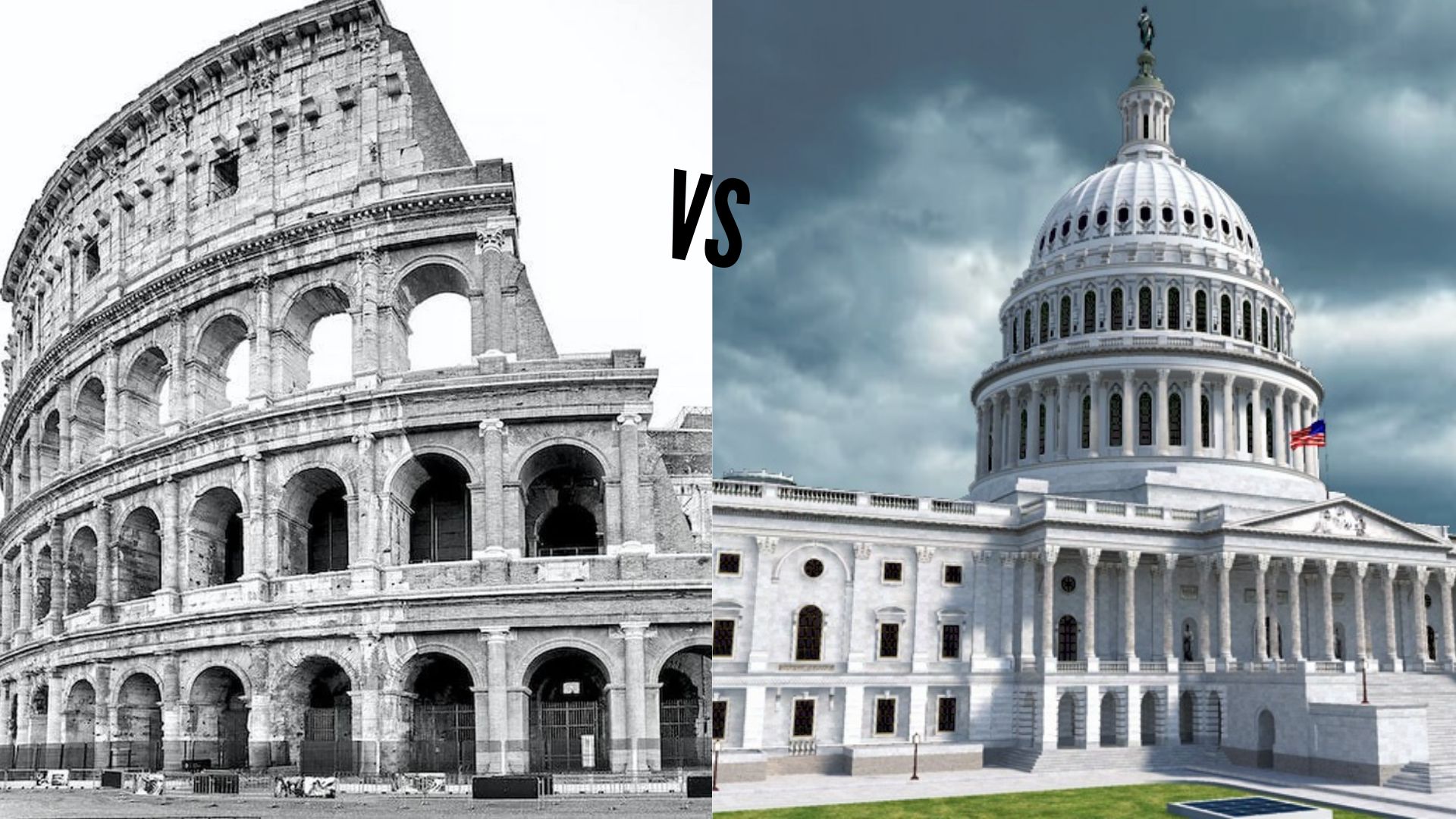
Italy vs US Architecture: The System Behind the Look
If you’ve ever landed in Rome or Florence and felt the city hold you tight, streets, thick walls, and buildings that seem to belong to one long story, then returned to a U.S. city where the skyline leaps upward, and neighborhoods stretch outward, you’re noticing something real.
As an architectural designer, I often tell my clients that a building is a physical manifestation of a culture’s relationship with time. In Italy, time is a neighbor you live with for centuries.
In the United States, time is a resource you manage for efficiency and growth. This core distinction dictates every material choice, urban layout, and residential floor plan across these two nations.
Key Takeaways: How Italy And The U.S. Diverge
- Italy is a layered country:Many places are built on centuries of accumulated streets and buildings, so change is often incremental and negotiated with heritage context.
- The U.S. is a growth-cycle country:Larger portions of the built environment were produced in faster, more recent development waves, often optimized for speed, scale, and modern infrastructure.
- Materials tell on the system:Italy’s older centers often express masonry traditions; U.S. housing is heavily shaped by wood-framing supply chains and standardized methods (NAHB’s Aug 2024 analysis of 2023 Census completions found 93% of new single-family completions were wood-framed).
- Rules shape the streetscape:Preservation frameworks and planning rules create different default building forms and renovation realities in each country.
- Public space hierarchy diverges:Italy’s piazza-and-street network often functions as outdoor living rooms, while many U.S. areas rely more on private space and car-access patterns.
The Core Contrast: Why Italian Architecture Differs From Us Foundations
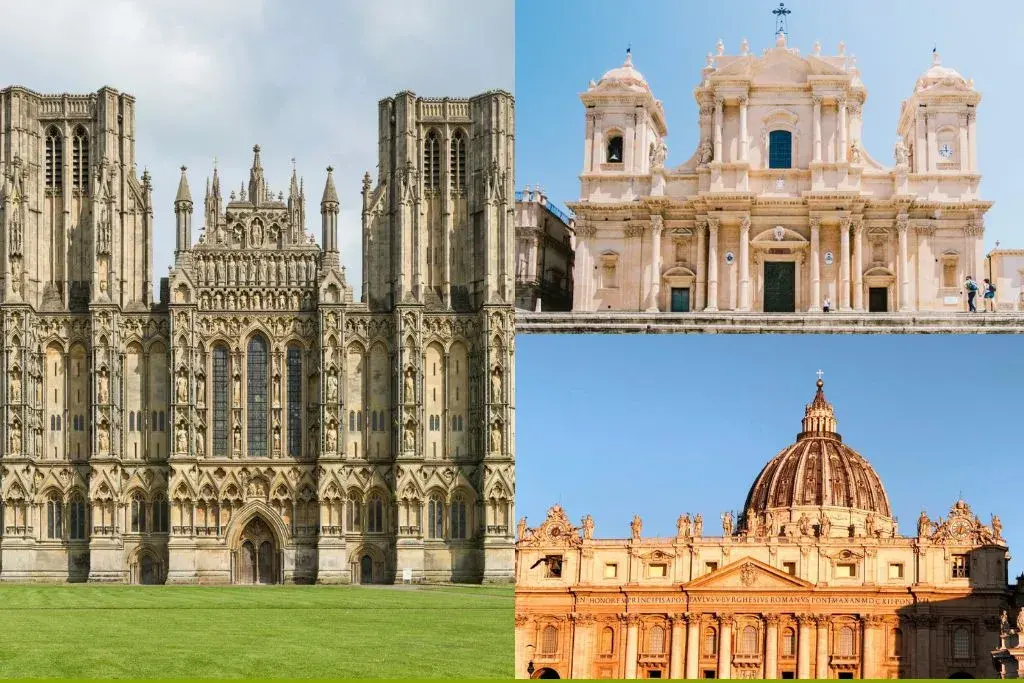
The primary difference lies in the bones of the structures. When you walk through a Tuscan village, you are surrounded by load-bearing masonry.
In contrast, a walk through an American suburb reveals the stick-frame revolution that defined the New World.
From Stone To Stick-Frame: The Material Divide
In Italy, the scarcity of timber and the abundance of high-quality stone and clay led to a tradition of heavy construction. Italian walls are often two feet thick, composed of stone or brick, and finished with lime-based stucco.
These materials provide immense thermal mass, absorbing the Mediterranean heat during the day and releasing it slowly at night.
The US, blessed with vast forest reserves during its peak expansion, pivoted toward the balloon frame and later the platform frame.
This method uses 2x4 or 2x6 lumber to create a skeleton that is then skinned with plywood and siding. This allows for incredibly rapid construction and internal flexibility, but it lacks the inherent permanence of stone.
The Philosophy Of Time: Centuries Vs. Decades
Italian architecture is additive. It is common to see a Roman foundation supporting a Medieval wall, topped with a Renaissance roof.
There is a deep respect for stratigraphy, the layering of history. In the US, the architectural ethos is often tabula rasa (clean slate).
If a building no longer serves its economic purpose, it is frequently demolished to make way for the next innovation. This creates a landscape of Progress in America versus a landscape of Preservation in Italy.
The Architecture Dna Matrix
This section gives you the cause-and-effect logic: the same few drivers repeatedly create the Italy look and the U.S. look. Once you learn the drivers, you stop memorizing styles and start predicting outcomes.
Time Depth - Layered Cities Vs Rapid Cycles
The Street Network And Buildings Of Italy
In many Italian cities, the shape of daily life was set centuries ago: narrow streets, compact blocks, and building plots that rarely change size.
Because the urban skeleton is inherited, new architecture often behaves like an adaptation layer working within fixed alignments, existing walls, and long-established neighborhood patterns.
The result is continuity: even when interiors modernize, the city still reads as one connected fabric.
Scale, Speed, And New Infrastructure In The U.S.
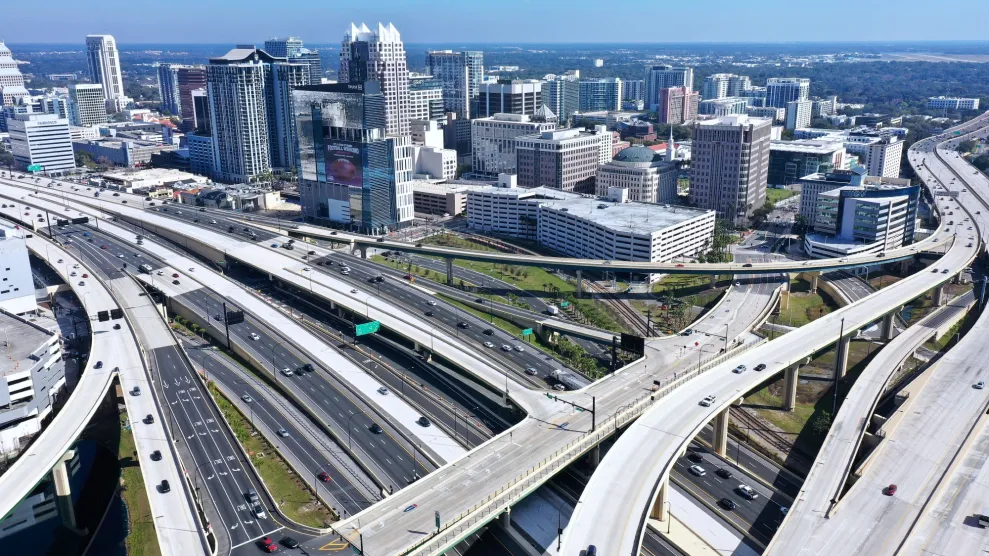
Large portions of the U.S. built environment were produced in faster development waves, especially where land was plentiful, and infrastructure expanded outward.
That makes it easier to re-plot land, widen roads, add parking, and rebuild at scale, so architecture often reflects growth cycles more than slow accumulation.
You see this in larger lot patterns, broader streets, and districts that can transform quickly when economics shift.
Preservation & Governance
Italy’s Context-First Approach To Change
In Italy, preservation often operates as a city-scale mindset: historic character is not only a few landmark buildings, but the streetscape, materials, and relationships between buildings.
This tends to make change more negotiated, favoring repair, careful insertion, and upgrades that respect the surrounding fabric.
The practical effect is that architecture evolves, but it rarely resets the neighborhood’s visual language all at once.
The U.S. Model: Designation, Process, And Variability
The U.S. preserves extensively, too, but it often does so through formal designation and review pathways that vary by city, state, and project type.
Some places have strong protections; others prioritize redevelopment, and the outcome can change block by block.
This creates a wider spectrum: a meticulously preserved district can sit a short drive from an area where replacement and new construction are the norm.
Land Economics & Planning
Italy: Compact Value, Mixed-Use Default
Italian historic centers often reward proximity: when everything is closer, streets support frequent doors, small storefronts, and everyday services woven into housing.
Density isn’t a feature; it’s the baseline condition that keeps the public realm active. That’s why city form and architecture frequently emphasize street edges, walkable sequences, and civic rooms like piazzas.
U.S.: Zoning Envelopes And Parking Gravity
In many U.S. metros, zoning and parking requirements strongly shape what gets built. Setbacks, separated uses, wide access roads, and large surface lots can become the hidden design brief.
Even good architecture can end up turning away from the street if the project is organized around vehicles and throughput.
Where rules allow mixed-use and reduced parking, the urban form often shifts quickly toward more Italian-like street life.
Materials & Trades
Italy: Masonry Memory And Durable Surfaces
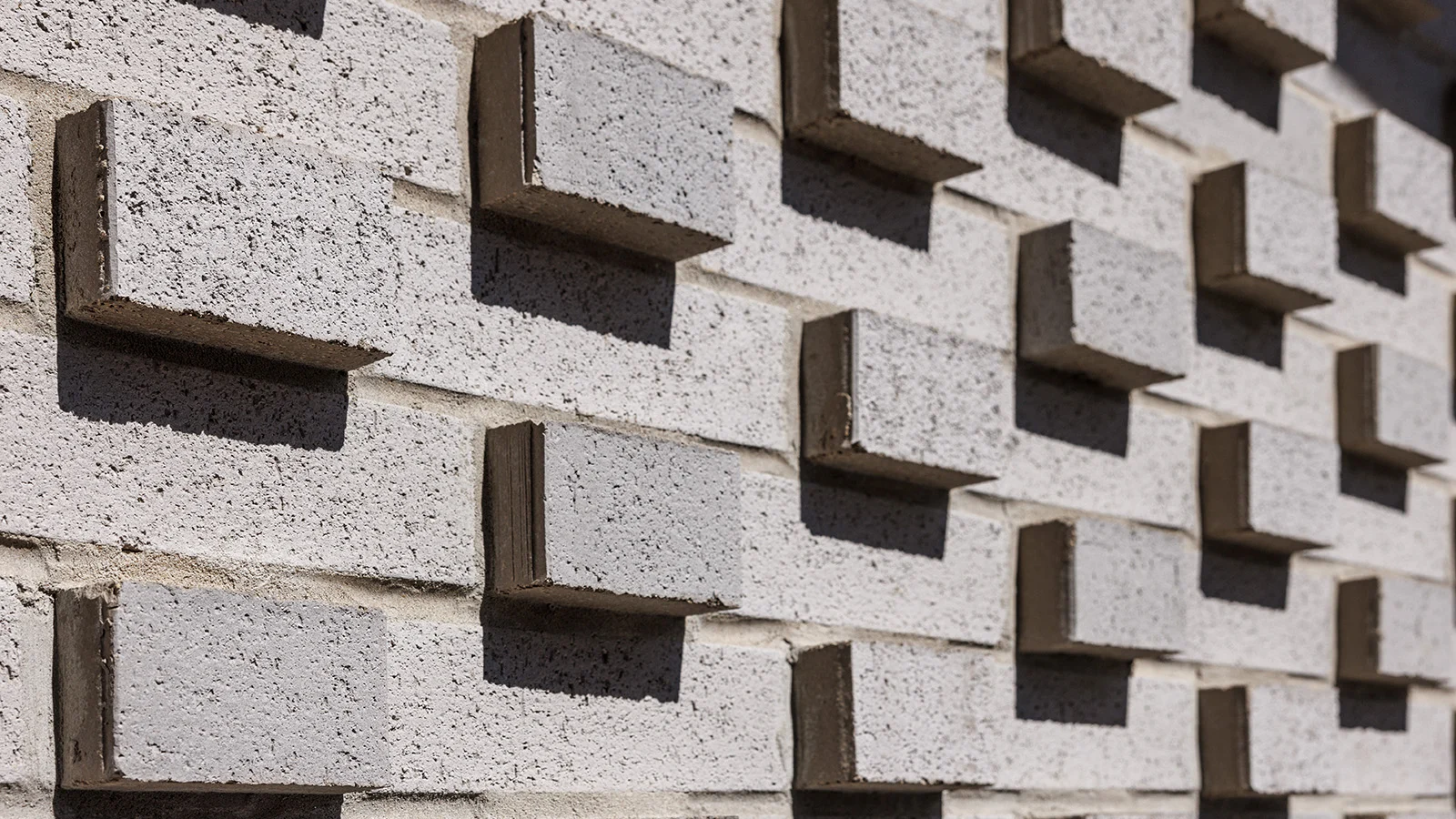
Older Italian building stock often reflects masonry traditions, thicker walls, deep window reveals, and exterior finishes that can be repaired in layers over time.
That doesn’t mean every new building is stone or brick, but the craft culture and inherited fabric keep masonry aesthetics and detailing highly legible.
Maintenance becomes part of the look: patina, patching, and incremental upgrades read as normal.
U.S: Standardized Systems And Rapid Construction
U.S. housing is heavily shaped by wood framing and standardized assemblies that can be built quickly and modified efficiently.
This influences proportion and detail; larger openings are easier, interiors can reconfigure more readily, and replacement cycles (siding, windows, roofing) are built into the ecosystem.
In commercial cores, steel and glass systems dominate skylines, reinforcing a different visual identity from residential neighborhoods.
Climate & Hazard Context
Italy: Performance Upgrades Within Older Shells
Italy spans varied climates and seismic zones, but a common challenge is upgrading comfort and safety inside buildings that were not designed for modern expectations.
Solutions often prioritize compatibility interventions that improve performance while respecting existing fabric and context.
In seismic areas, the retrofit strategy becomes a careful balance between resilience and conservation.
U.S: Region-Driven Envelopes And Code Ecosystems
The U.S. also spans extreme climates and hazards, and building performance often follows region-specific demands: insulation strategies, storm resistance, wildfire considerations, and moisture control can vary widely.
Because adoption and enforcement can differ by jurisdiction, the same building type may look and perform differently across states.
This produces a strong regional diversity architecture that fits Florida, which can feel completely alien in Arizona or Minnesota.
Lifestyle Patterns
Italy: The Public Realm As An Extension Of Home
Italian urban life often treats streets, cafes, and squares as everyday living spaces, places to meet, pause, and socialize.
Architecture responds by strengthening edges: doors, balconies, shutters, and ground-floor activity that engage the street. The city becomes a shared interior, and buildings feel designed to participate in it.
U.S: Private Space, Convenience, And Daily Logistics
In many U.S. contexts, daily routines are organized around private space and mobility in larger homes, storage, separated rooms, and a strong relationship to the car.
Architecture supports this with layouts that prioritize privacy, utility zones, and convenient access.
The result is a different center of gravity: life is often designed to happen inside the home or at destination nodes, not continuously along the street.
Spatial Planning & Layout Logic
Italy: Sequence, Enclosure, And Rooms In The City
Italian design often prioritizes how spaces unfold: a narrow street opens into a piazza, a heavy facade reveals a courtyard, and circulation feels layered rather than direct.
Buildings and blocks tend to reinforce enclosure, and continuity of street walls line up, thresholds are frequent, and the public realm reads like a chain of connected outdoor rooms.
The result is an experience built around rhythm, discovery, and human-scale proportion.
U.S: Clarity, Flexibility, And Scale-Driven Efficiency
U.S. design often favors legibility and adaptability: clearer circulation, more open interior planning, and systems that make reconfiguration easier over time.
At the urban level, districts are frequently organized around access, parking, and movement corridors, which shape how buildings front the street.
Even in walkable neighborhoods, the design language often reflects larger blocks and a more planned, infrastructure-forward logic.
Ornament & Finish Language
Italy: Integrated Craft, Proportion, And Patina
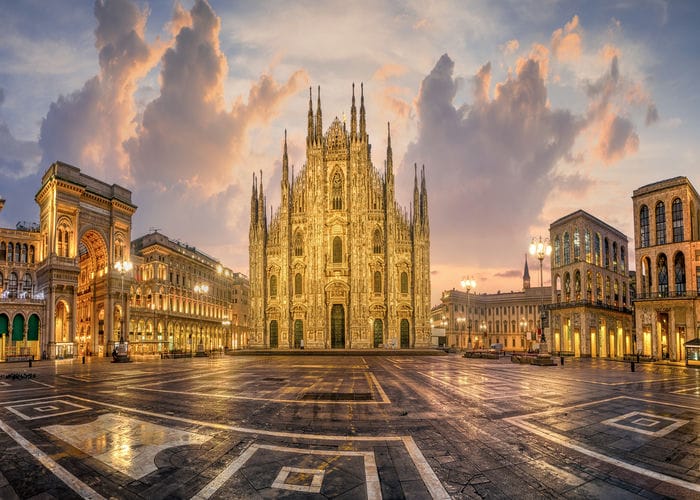
In many Italian contexts, decoration is closely tied to building tradition, stucco, stone, cornices, shutters, wrought iron, and proportion systems that make facades feel composed rather than applied.
Just as important, age is allowed to show: weathering, repairs, and subtle variations become part of the aesthetic.
Surfaces communicate continuity, and maintenance often reads as a visible layer of history, not a flaw to erase.
U.S: Productized Finishes, Refresh Cycles, And Brand-Driven Expression
In many U.S. contexts, decoration is more often delivered through standardized finish systems, siding profiles, trim packages, window styles, and materials selected for speed, availability, and cost control.
That can create faster aesthetic turnover as components are replaced on predictable cycles.
In commercial areas, decoration frequently shifts from ornament to minimalismand identity, steel-and-glass expression, clean lines, and branding cues, making the skyline and massing as important as facade detail.
Also Checkout: The Evolution Of Spanish Architecture
Building-Scale Differences You Can See Up Close
You’ll get a set of close reading cues here: structure, surface, and roof language, the details that quietly signal how a place builds.
Structural Bones
Older masonry buildings set stricter structural limits: openings are harder to enlarge, walls feel thicker with deeper window reveals, and major layout changes can be complex, especially in protected contexts.
Many U.S. homes use frame construction, which typically makes windows, doors, and interior reconfiguration easier and faster (within code and engineering limits).
Facades And Weathering
Italian streets often show patina, plaster repairs, stone wear, and layered interventions that remain visible. The city accepts the building as something maintained over time.
In the U.S., many building assemblies (especially residential) are designed for replacement cycles: siding, roofing, windows, and finishes are frequently swapped in standardized ways.
In commercial districts, steel-and-glass systems can emphasize crispness and uniformity.
Rooflines And Climate Cues
Italy is famous for terracotta roofs and certain regional profiles, but what matters is the logic: roofs communicate climate, material availability, and tradition.
The U.S. has enormous roof diversity, pitches, overhangs, and materials that vary widely by region and code requirements.
Home & Apartment Layouts
This section explains why Italian homes feel different, isn’t just about furniture; it’s about urban fabric, typical building types, and lifestyle assumptions.
Italian Apartment Logic
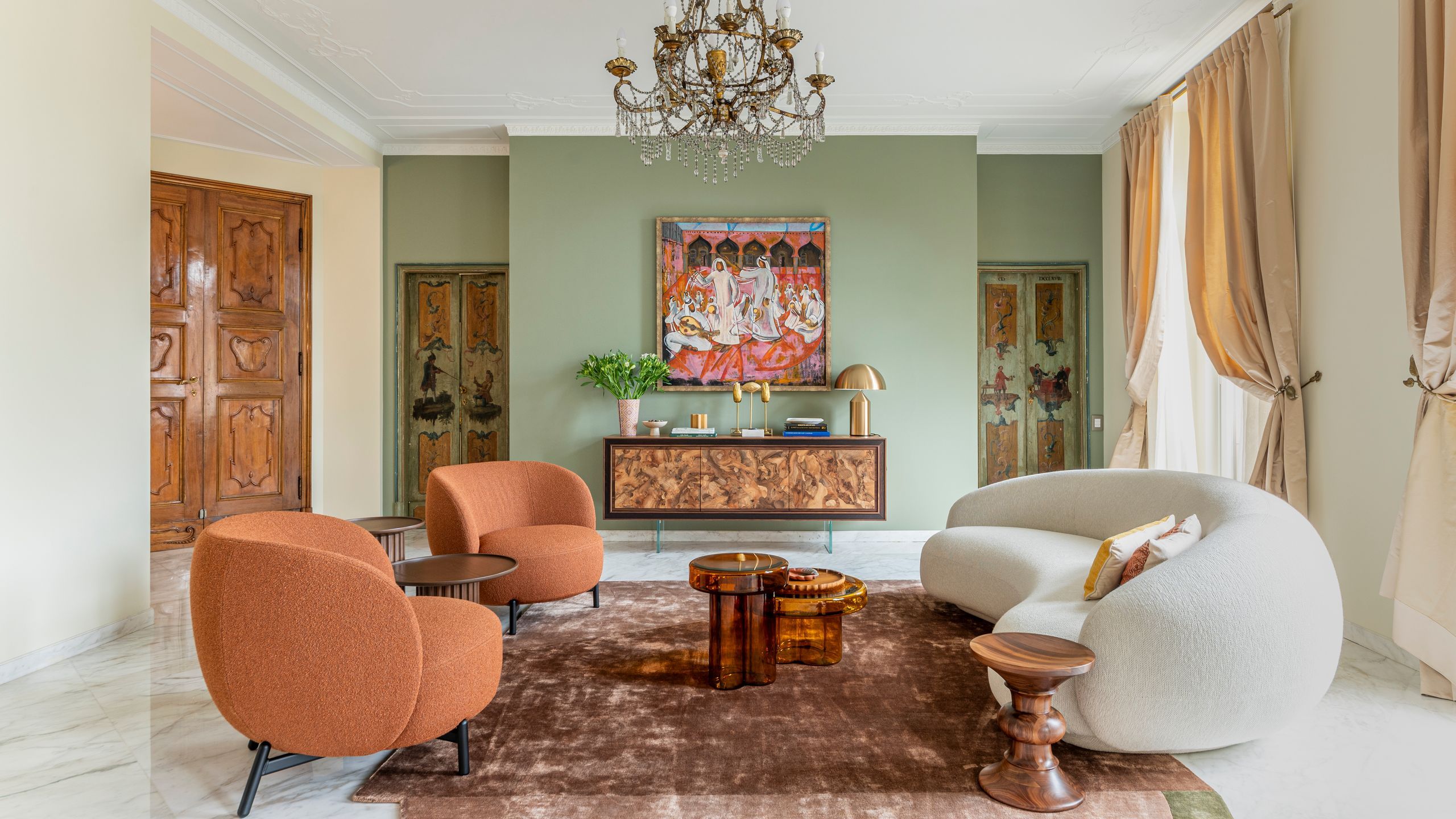
Illustrative scenario:A young professional rents an apartment in a historic neighborhood near a transit line.
The building footprint is fixed; the stair is where they are; the windows are where they’ve always been. The interior often prioritizes a strong social zone, kitchen/dining/living, because daily life extends into the neighborhood: markets, cafes, the street.
The plan tends to be compact, not because Italians like small, but because the city form and building stock often push toward efficient footprints and shared urban amenities.
U.S. Housing Logic
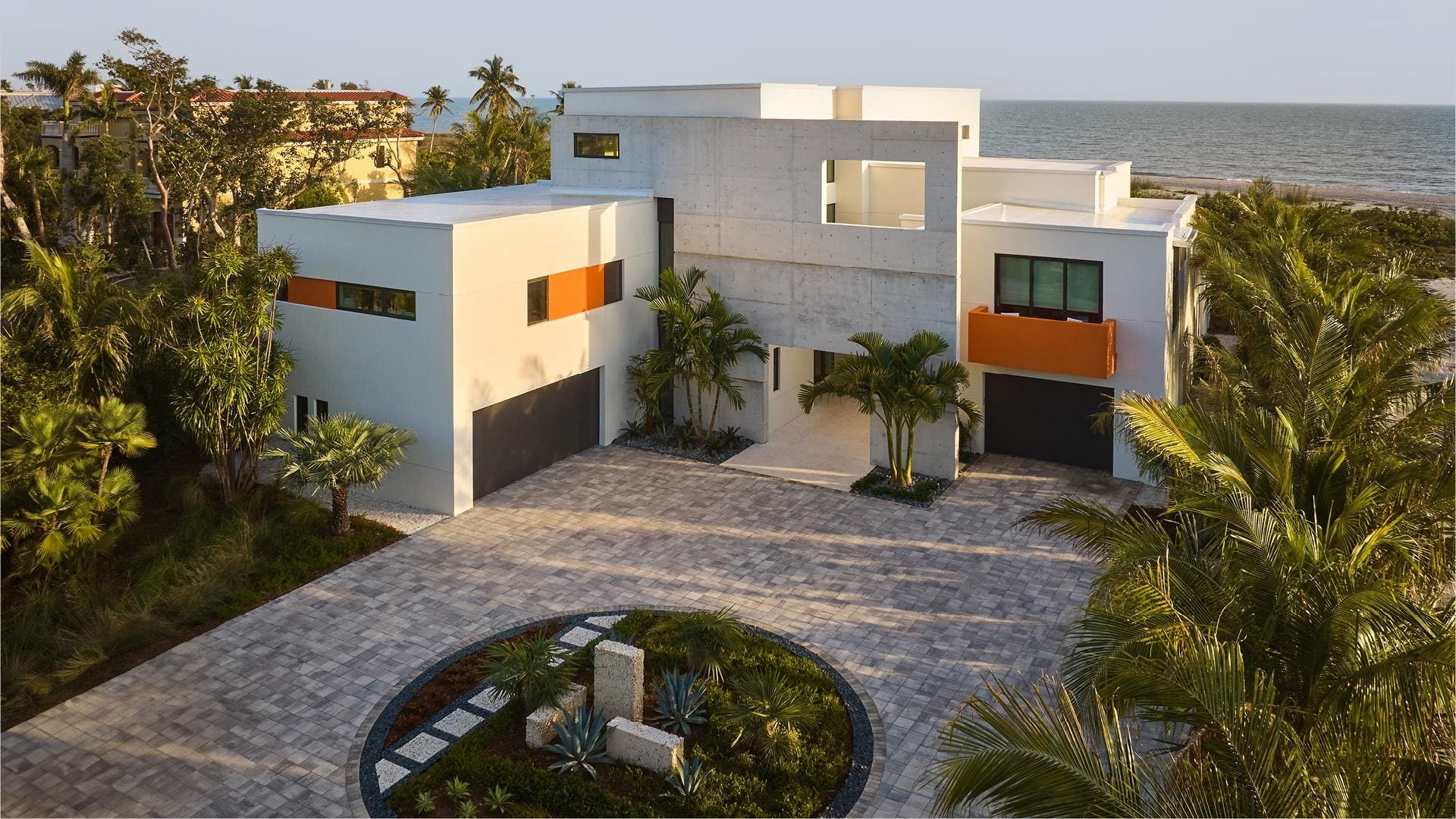
Illustrative scenario:A family buys a home where land is cheaper farther from the center. The house is larger, storage is generous, and spaces are more separated: private bedrooms, dedicated utility zones, and often a garage as a daily threshold.
This is not inherently better or worse; it’s a response to land patterns, mobility norms, and a housing system that frequently produces space at scale.
How To Borrow Design Ideas
Comparing Italian and American architecture is most valuable when we translate the underlying logic of a system rather than just its look.
Avoid pastiche like slapping fake stone on a timber frame. Instead, focus on how the bones of a building serve the life within.
Bringing Italian Urbanism To U.S. Projects
To infuse American developments with Italian vitality, borrow the social systems:
- Courtyard Logic:Treat courtyards as outdoor living rooms that provide light and social value without increasing the footprint.
- Active Edges:Design street levels with frequent doors and windows to create a rhythm that encourages walking.
- Microclimate Design:Use deep shade, arcades, and canopies to make public spaces comfortable, treating climate control as architecture, not decoration.
- Tighter Blocks:Aim for shorter blocks and reduced setbacks to transform car-scale sprawl into human-scale intimacy.
Bringing U.S. Innovation To Italian Constraints
When modernizing Italy’s historic fabric, use quiet innovation:
- Reversible Upgrades:Use modular, freestanding systems to improve performance without permanently damaging ancient stone.
- Performance Engineering:Apply U.S. building science (air-tightness and glazing) to drastically improve the energy efficiency of drafty masonry.
- Resilient Detailing:Use flexible, modern detailing to meet strict seismic safety codes (Eurocode 8) while preserving the delicate heritage of the original structure.
The 2026 Pivot: Surgical Modernism Vs. The Industrialized Envelope
Modernity looks different when you’re building on a 500-year-old foundation versus a greenfield site. Today, both nations are racing toward the same sustainability goals, but their engines for getting there are worlds apart.
Italy: Surgical Modernism And The Active Shell
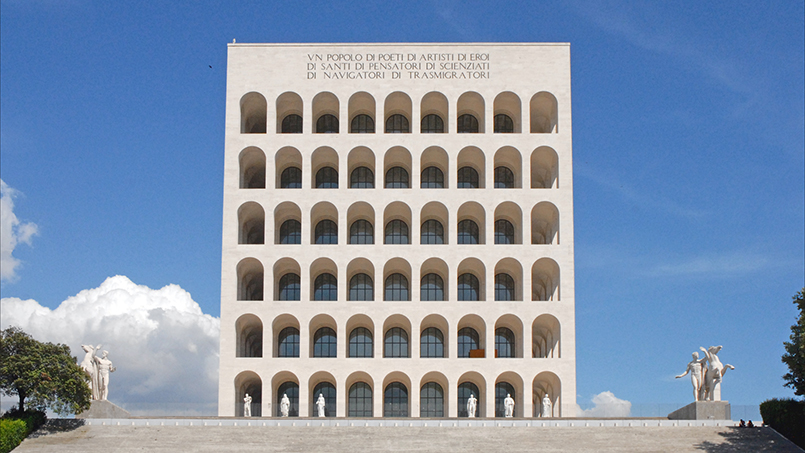
In Italy, the modern architectural movement isn't about building new; it’s about the Surgical Retrofit. Because of the EU’s strict energy mandates, architects are now treating historic masonry as a shell that must be upgraded from the inside.
- Internal High-Performance Inserts:Rather than tearing down, Italians are inserting independent, high-tech pods or active layers inside ancient walls to handle HVAC and smart-home tech without touching the stone.
- HBIM (Heritage Building Information Modeling):Italy leads the world in using 3D laser scanning to create digital twins of ancient ruins. They don't use BIM to build faster; they use it to understand exactly how a 14th-century wall is breathing.
The U.S. Industrialized Resilience And The Missing Middle

In the U.S., the Modern era is defined by a shift from the single-family stick-frame house toward Mass Timber and Prefabrication.
- The Density Revolution: As zoning laws change to allow more than one house per lot, we see the rise of Accessory Dwelling Units (ADUs). This is America's attempt to create the Italian density within the existing suburban fabric.
- Climate-Adaptive Skins:While Italy relies on thermal mass (thick stone), the U.S. is moving toward highly engineered, sacrificial skins. These are facades designed to survive specific regional hazards like wildfires in the West or hurricanes in the Southeast that can be easily swapped or repaired after an event.
Don' Miss:Islamic Architecture
Frequently Asked Questions
What Style Of Architecture Is In Italy?
Italy spans Roman through Renaissance and Baroque influences, but modern Italy also builds contemporary work, often integrated carefully into historic contexts.
What Is American Architecture?
American architecture blends European roots with innovations like skyscrapers, suburban housing patterns, and modernist movements shaped by technology, land, and regulation.
How Does Italian Architecture Differ From The Us In One Sentence?
Italy is shaped by layered historic cities and heritage context; the U.S. is shaped by growth cycles, zoning patterns, and modern construction ecosystems.
Why Are Many Italian Buildings Masonry?
Much of Italy’s older building stock was built with masonry traditions and local materials, and those inherited structures still shape streetscapes and renovation realities today.
Why Are Many U.S. Houses Wood-Framed?
Wood framing is fast and flexible, and it remains dominant in U.S. single-family construction.
Are Italian Cities More Walkable Than U.S. Cities?
Many Italian historic centers evolved before cars and kept compact street networks, while many U.S. areas were planned around driving and separated uses.
Does Preservation Affect What Can Be Built In Italy?
Yes. Heritage approaches emphasize integrating conservation into urban development, which can constrain demolition and exterior changes in historic contexts.
Does The U.S. Preserve Historic Buildings, Too?
Yes. U.S. preservation includes formal frameworks like the National Historic Preservation Act, which established national programs and procedural protections at the federal level.
How Do Zoning Rules Change Architecture In The U.S.?
Zoning can separate uses and shape setbacks and parking requirements, which influences building form and often reduces dense mixed-use patterns outside certain districts.
What’s The Biggest Difference In Feel Inside Homes?
Italian interiors often pair compact efficiency with vibrant neighborhood life; many U.S. homes emphasize private space, storage, and logistics like garages.
Are Italian Buildings Better Built Than U.S. Buildings?
Not inherently. Each system optimizes differently. Italy often reflects long-term fabric and constraints; the U.S. often reflects speed, flexibility, and standardized production.
How Do Climate And Earthquakes Influence Italy Vs U.S.?
Both countries face varied hazards. Europe’s Eurocodes (including Eurocode 8 for seismic design) and U.S. code adoption ecosystems guide different detailing and retrofit strategies.
Final Thoughts
If you remember one idea, make it this: architecture is the visible output of invisible systems. Italy’s layered city fabric and heritage logic push architecture toward continuity and adaptation.
The U.S.’s growth cycles, planning patterns, and construction ecosystems push architecture toward scale, specialization, and faster change.
Next time you’re in either place, try a 60-second read: street pattern → public space hierarchy → materials → editability.
You’ll stop seeing Italian vs American as a taste debate and start seeing the real machine underneath.
Jump to
Italy vs US Architecture: The System Behind the Look
The Core Contrast: Why Italian Architecture Differs From Us Foundations
The Architecture Dna Matrix
Building-Scale Differences You Can See Up Close
Home & Apartment Layouts
How To Borrow Design Ideas
The 2026 Pivot: Surgical Modernism Vs. The Industrialized Envelope
Frequently Asked Questions
Final Thoughts

George Evans
Author
George Anderson, an exceptional architectural designer, envisions and brings to life structures that transcend the realm of imagination. With an unwavering passion for design and an innate eye for detail, George seamlessly blends form and function, creating immersive spaces that inspire awe.
Driven by a deep appreciation for the interplay of space, light, and materials, George's innovative approach redefines the possibilities of architectural design. His visionary compositions leave an indelible mark, evoking a sense of wonder and transforming the built environment.
George Anderson's transformative designs and unwavering dedication continue to shape the architectural landscape, pushing the boundaries of what is possible and inspiring generations to come.
Latest Articles
Popular Articles