Leonardo Da Vinci Architecture - The Ideas Behind His Unbuilt Work
From fortified cities to perfect churches, dive into the drawings and evidence-based theories that defined Leonardo’s revolutionary vision.
Author:George EvansFeb 08, 20266.8K Shares116.2K Views
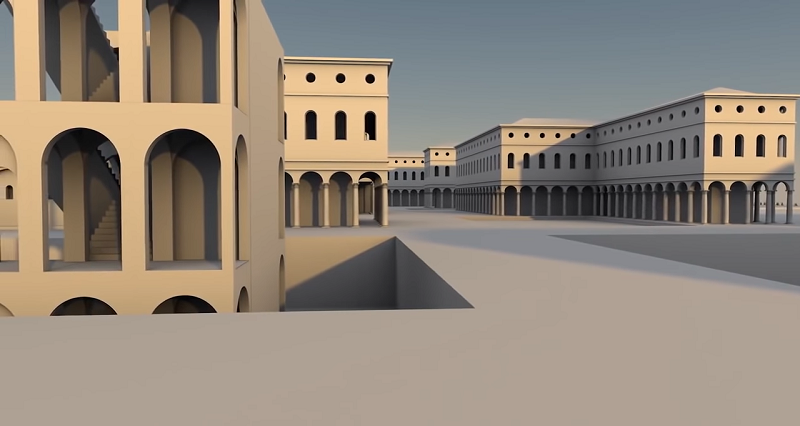
Leonardo Da Vinci Architecture: How To Read His Sketches Like An Architect
Leonardo’s architecture is easy to misunderstand because it doesn’t behave like architecture in the usual sense. There are commissions, proposals, and breathtaking drawingsyet the built legacy is elusive.
For an architect, that’s not a disappointment. It’s an invitation: Leonardo’s notebooks function like a design studio captured on paperwhere geometry, circulation, water, structure, and defense are tested as one system.
The payoff for you is learning how to look at these drawings so they stop feeling like beautiful mysteries and start reading like design decisions.
Key Takeaways: The Da Vinci Architectural Signature
- The Ideal City: A theoretical urban plan designed to mitigate plague, featuring a two-tiered street system that separated pedestrians from commercial traffic and waste.
- Centralized Planning: A rejection of the traditional Latin Cross layout in favor of symmetrical, centralized churches (circles and octagons) representing divine perfection.
- The Double-Helix: An ingenious circulation design allowing simultaneous ascent and descent without collision, most famously realized at the Château de Chambord.
- Structural Organicism:The belief that a building functions like a living organism, where every arch and column serves a metabolic purpose for the whole.
The Ideal City: Urban Planning Meets Human Health
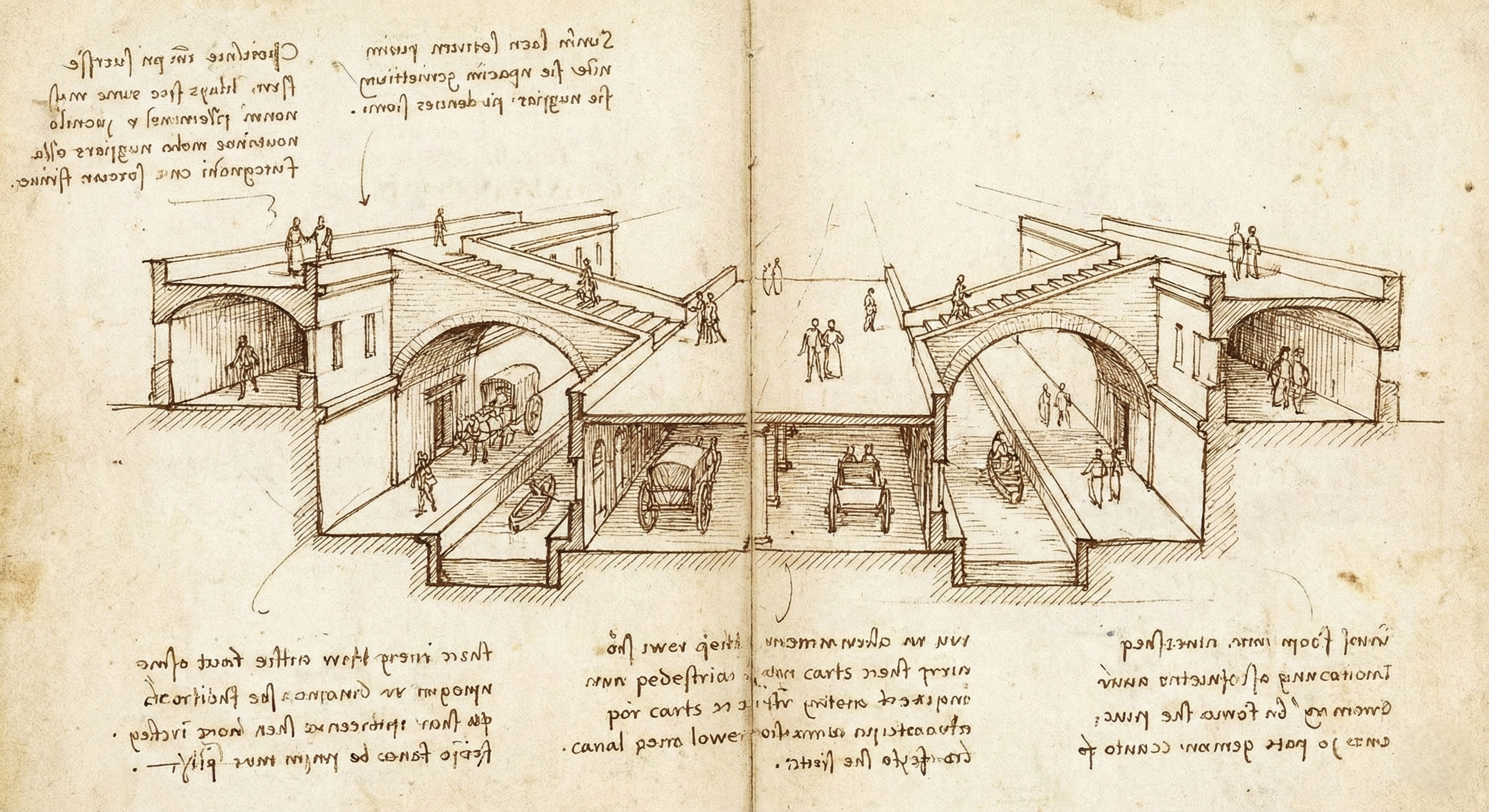
The catalyst for Leonardo's most radical architectural thinking was not a commission, but a catastrophe. In 1484, the bubonic plague ravagedMilan, killing nearly a third of the population. While others saw the wrath of God, Leonardo saw a design failure.
He realized that the medieval citywith its narrow, squalid streets and lack of sanitationwas a death trap. His response was the Ideal City, a concept that reimagined urbanism not just as a collection of buildings, but as a machine for health.
The Plague As A Catalyst
Leonardo observed that the congestion of Milan contributed to the spread of disease. He wrote in the Codex Atlanticus of his desire to disperse the great congregation of people who herd together like goats in a pen, filling every space with their stench and sowing seeds of pestilence and death.
His solution was radical decentralization, proposing ten satellite towns to relieve the density of the capitala precursor to modern suburban planning.
The Multi-Level Street Concept
The most visionary element of his Ideal City was the vertical separation of traffic. In his sketches, we see a city split into functional layers.
The upper level was reserved for gentlemen, designated for pedestrian strolling and social interaction, bathed in light and air.
The lower level, connected by stairs and ramps, was the domain of commerce, carts, and sanitation. This is where the city's metabolism occurred.
By separating the clean from the unclean, the leisure class from the working traffic, Leonardo anticipated the zoning laws and grade-separated infrastructure (like underground subways and elevated walkways) that define modern metropolises like London or Hong Kong.
The City As An Organism
For Leonardo, the city was a living body. He designed canals to flow through the lower levels like veins, flushing away waste and bringing in goods via hydraulic locks.
He ensured that the width of the streets equaled the height of the adjacent palaces to ensure sunlight reached the pavementa regulation that wouldn't become standard in Europe until the 19th century. He was not designing a monument; he was designing a functioning immune system for society.
Leonardo’s Theory vs. 15th Century Reality
| Feature: Leonardo's Ideal City Concept | Feature: 15th Century Milan Reality |
| Street Layout: Wide, straight avenues (width = building height). | Street Layout: Narrow, winding, dark medieval alleys. |
| Traffic Flow: Two levels: pedestrians above, carts below. | Traffic Flow:Chaos: Animals, carts, and people mixed. |
| Sanitation: Underground canals and sluices to flush waste. | Sanitation: Open gutters and stagnant filth. |
| Lighting: Maximized natural light and air circulation. | Lighting: Shadowy, damp, and prone to miasma. |
Sacred Geometry: The Centralized Church Designs
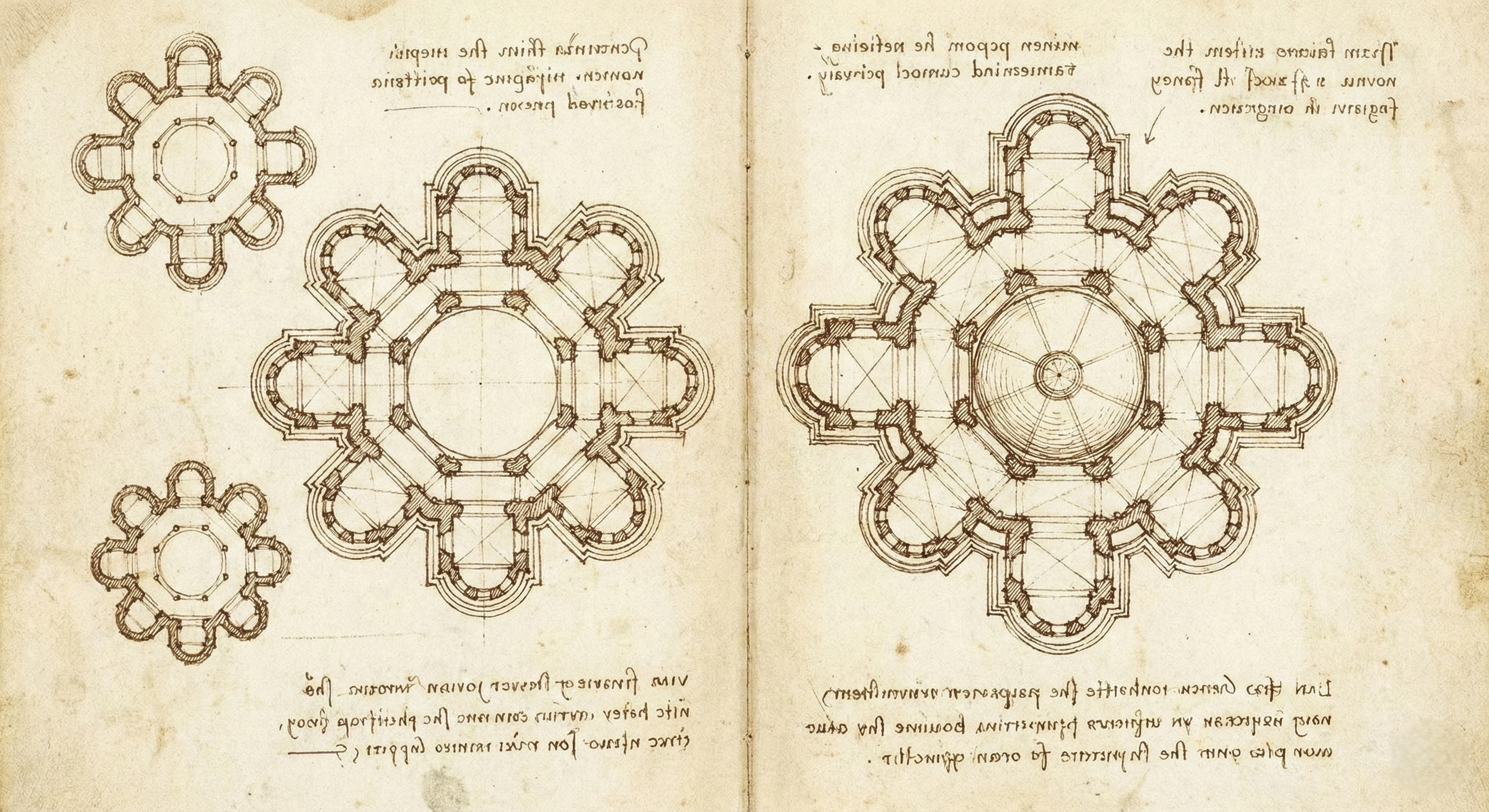
The Leonardo View: Inventing the X-Ray Before Leonardo, architects mostly drew flat, two-dimensional elevations. Leonardo pioneered the cutaway perspective and the transparent view, drawing buildings as if the walls were made of glass.
This allowed him to show the relationship between the exterior shell and the interior volume simultaneously. For modern architects, this technique is the ancestor of the BIM modela simultaneous understanding of skin and structure. He didn't just draw how a building looked; he drew how it worked.
While his urban plans focused on hygiene, his religious designs focused on perfection. In the High Renaissance, architecture was a search for divine harmony, and for Leonardo, that harmony was geometric.
Moving Away From The Latin Cross
The traditional church layout of the time was the Latin Cross, which prioritized the procession toward the altar. Leonardo, however, was obsessed with the centralized plan. He filled the pages of Manuscript B with sketches of churches based on circles, squares, and octagons.
To Leonardo, the circle was the purest form, having no beginning and no end. A church built around a central dome allowed the voice of God (acoustics) and the eye of God (light) to be distributed equally. This was a theological statement as much as an architectural one: God is the center of the universe, and the building should reflect that radial symmetry.
Sketches In Manuscript B
If you examine Manuscript B, held today in Paris, you see designs that look almost biological. Smaller budding domes and chapels often surround a massive central dome.
These aren't just decorative; they act as structural buttresses, supporting the outward thrust of the main dome.
It is a perfect marriage of the aesthetic desire for symmetry and the engineering necessity of load distribution.
Influence On Bramante And St. Peter's
Leonardo’s time in Milan coincided with that of Donato Bramante, another titan of the Renaissance.
The two were close friends, and architectural historians widely accept that Leonardo’s sketches of centralized churches heavily influenced Bramante’s original plan for St. Peter’s Basilica in Rome.
While Leonardo never poured the concrete, the DNA of his centralized vision is embedded in the Vatican itself.
The Chambord Connection: The Double-Helix Staircase
Perhaps the most tantalizing ghost of Leonardo’s architecture is found in the Loire Valley of France. In 1516, King Francis I invited Leonardo to France, naming him First Painter, Engineer, and Architect to the King.
Leonardo spent his final years at Clos Lucé, near the royal Château de Chambord, which began construction shortly after his death.
Solving The Traffic Problem
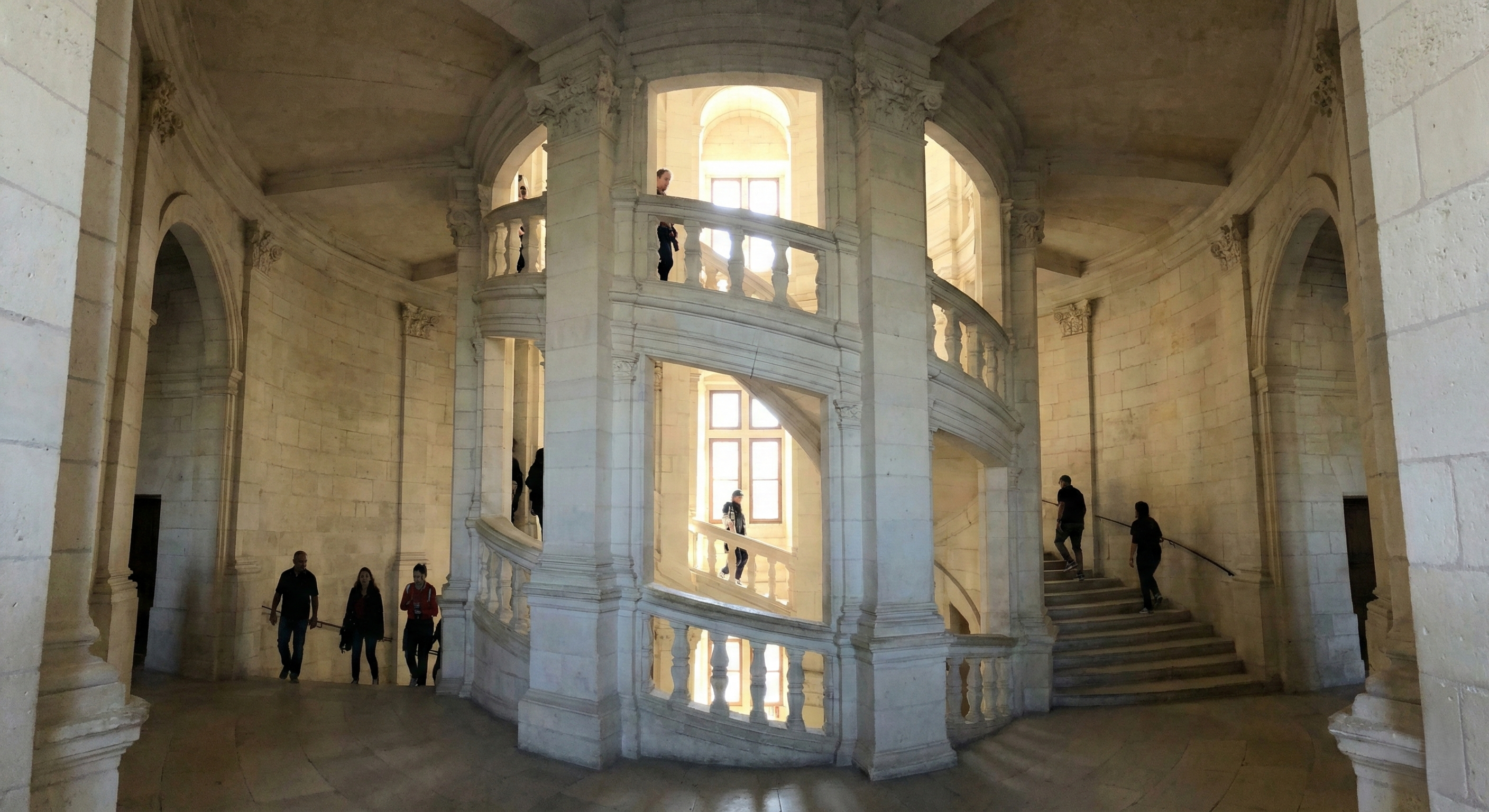
The centerpiece of Chambord is the famous double-helix staircase. It consists of two nested spiral staircases that wind around a central hollow core.
Two people can use the stairs simultaneouslyone ascending, one descendingwithout ever meeting, though they can see each other through open windows in the core.
Evidence Of Leonardo’s Hand
While no contract bears his signature, the design is pure Leonardo.
- The Precedent: Similar double-helix designs appear in the Codex Atlanticus years prior.
- The Romorantin Project: Leonardo had been working on a massive palace design for the King at Romorantin, which included complex hydraulic and structural ideas that were later abandoned but likely migrated to Chambord.
- The Geometry: The staircase acts as the central axis of the château, adhering to the centralized plan Leonardo championed. It transforms a staircase from a utility into a piece of spatial theater.
Designer's Perspective: Why the Double Helix Matters
In my experience designing commercial spaces, circulation is usually a problem to be solved. How do we move people from A to B efficiently? Leonardo turned circulation into the destination.
The double-helix isn't just a clever trick; it’s a masterclass in flow efficiency. In a royal court filled with spies, gossip, and rigid social hierarchy, the ability to move people separately but visibly was a brilliant social tool.
He didn't just design a stair; he choreographed a dance. - George Anderson
Engineering The Structure: Studies On Friction And Load
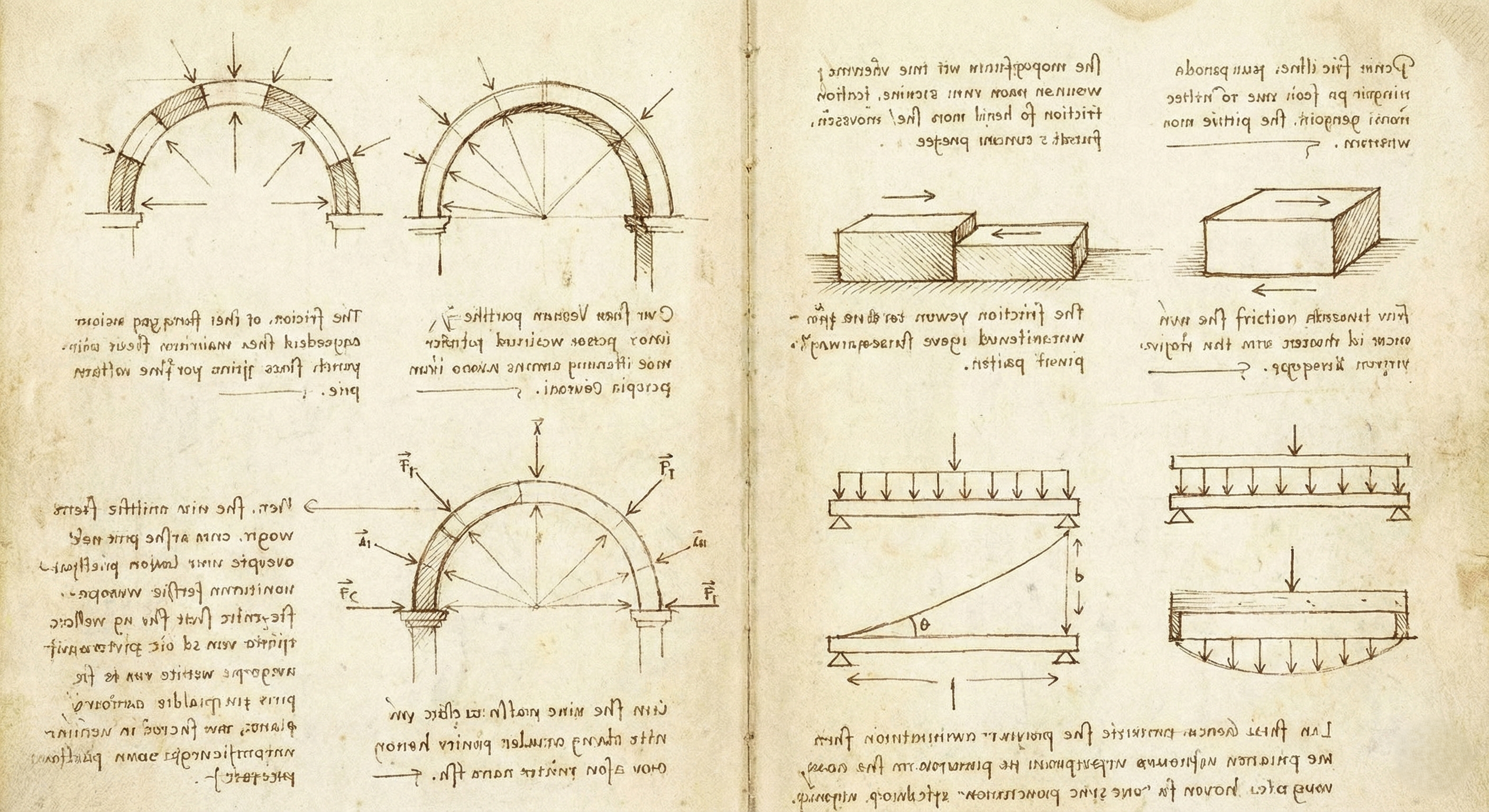
We must not forget that Leonardo was, at heart, an engineer. He did not just draw pretty facades; he calculated how they would stand up. He treated buildings as physical systems subject to the laws of nature.
The Tiburio Of Milan Cathedral
One of his earliest architectural engagements was the competition to design the tiburio (crossing tower) of Milan Cathedral. While his design was not chosen, his approach was revealing.
He didn't present a stylistic model; he presented a structural thesis. He analyzed the weight distribution and the necessity of binding the Gothic arches to prevent them from bursting outward.
Arch And Crack Analysis
Leonardo was arguably the first to systematically study structural pathologywhy buildings fail. He wrote, An arch is nothing else than a force caused by two weaknesses, famously noting that an arch consists of two quadrants that want to fall, but hold each other up.
He sketched cracks in walls to understand how foundations settle. He studied friction and the shear strength of beams. In an era when most architects relied on rule-of-thumb tradition, Leonardo was applying the scientific method to masonry.
The Leonardo Portfolio: 10 Masterworks Of The Built & Unbuilt
To truly understand Leonardo the Architect, we must look beyond the famous paintings to the projects that filled his notebooks.
Some were built and lost, some were built and ignored, and some were simply too advanced for the 16th century to construct. Here is a curated selection of his most significant architectural contributions.
1. The Golden Horn Bridge
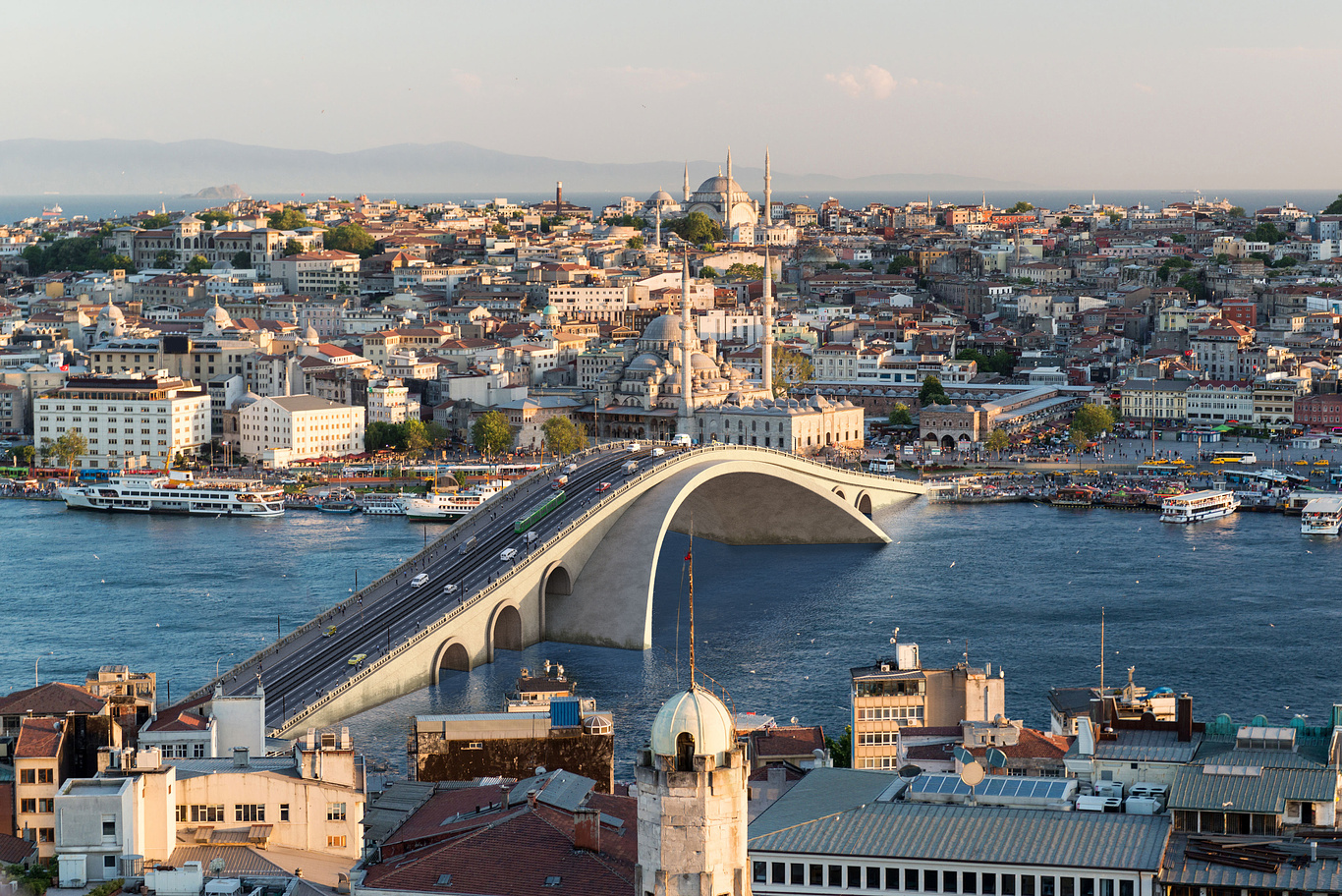
In 1502, Sultan Bajazet II requested a design for a bridge to span the Golden Horn inlet in Istanbul. Leonardo proposed a single, massive, flattened arch240 meters long. At the time, it would have been the longest span in the world.
The Innovation: Unlike Roman semi-circular arches that required multiple piers, Leonardo’s design used a pressed-bow shape and splayed abutments to resist lateral wind loadsdemonstrating an understanding of aerodynamics centuries before wind tunnels.
Civil engineers at MIT recently tested a 3D-printed model of this design and proved it would have held its own weight without mortar.
2. The Rivellino Of Locarno
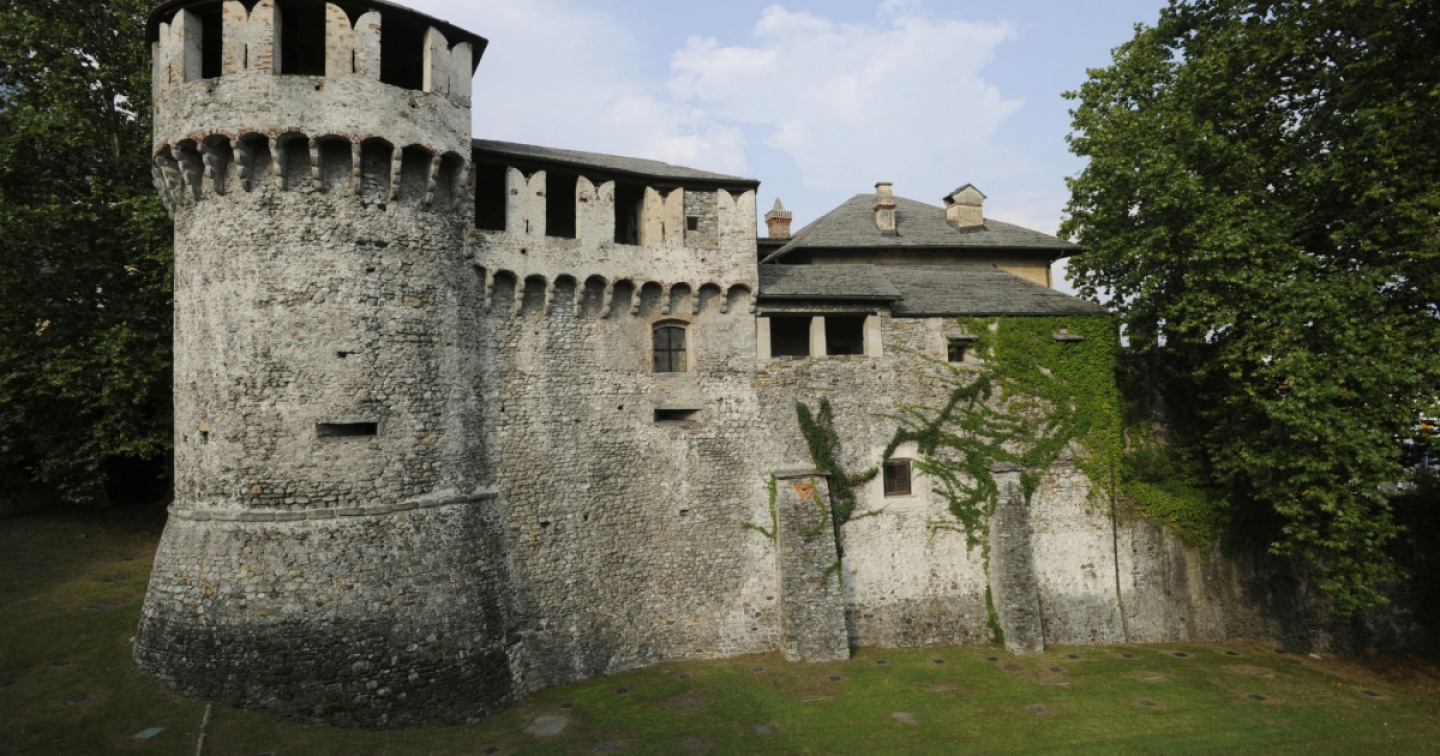
While much of Leonardo’s architecture is theoretical, the Rivellino of the Visconteo Castle in Locarno, Switzerland, is a rare surviving structure attributed to him.
The Innovation: Built around 1507, this pentagonal fortification features walls designed specifically to deflect cannon fire and prevent enemy ladders from adhering to the stone.
It is a brutal, functional piece of military industrial design that lacks the ornamentation of his church sketches, proving he could design for war as capably as for God.
3. The Map Of Imola
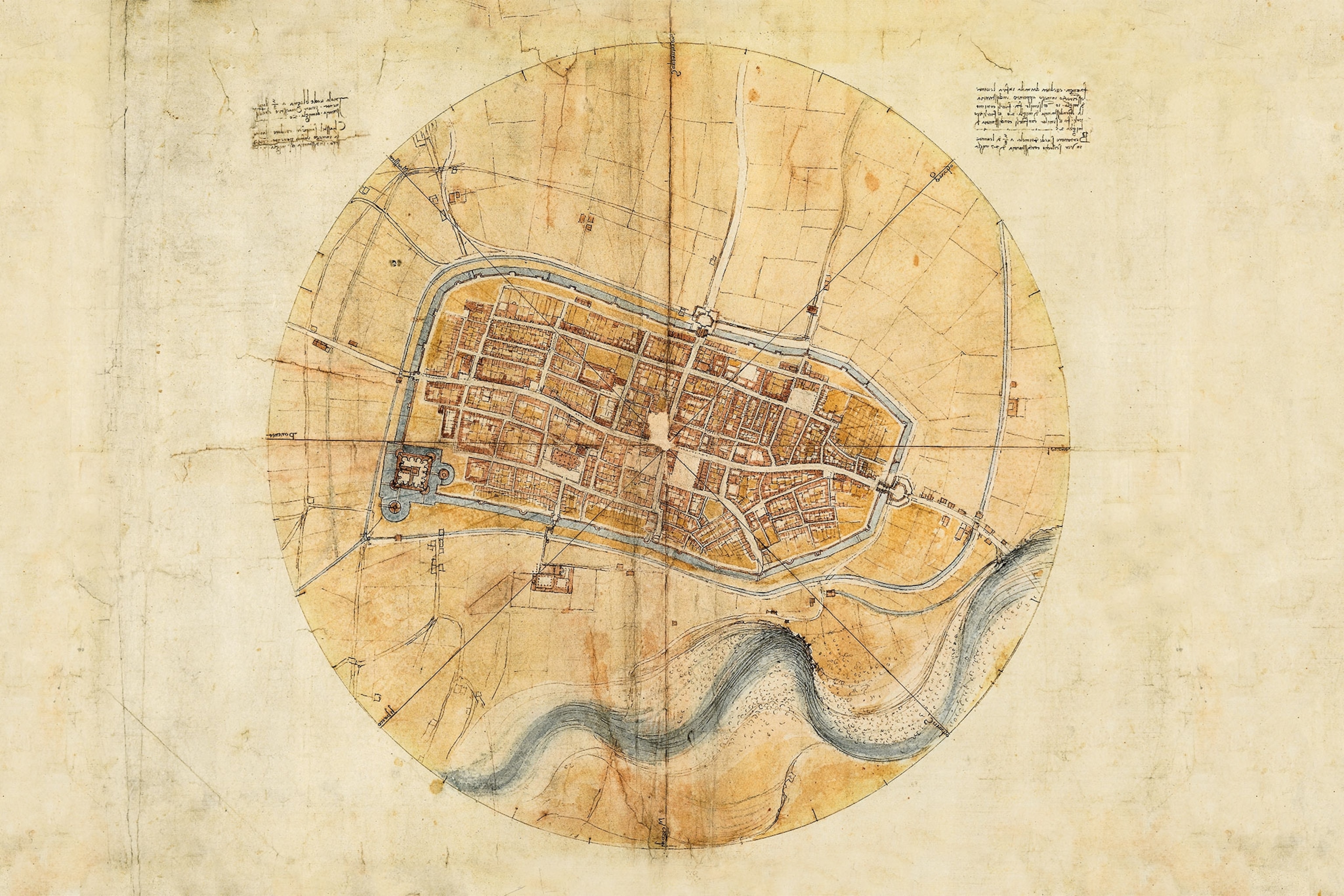
When Cesare Borgiahired Leonardo as his military engineer, his first task was not to build, but to see. The resulting Plan of Imola is arguably the most famous map in the history of cartography.
The Innovation: This was the first ichnographic mapa strictly top-down, satellite-style view. Before this, maps were drawn in perspective, which obscured streets behind buildings. Leonardo used a magnetic compass and odometer to measure the city street by street, creating a tool for precise military defense rather than artistic representation.
4. The Ideal Stable
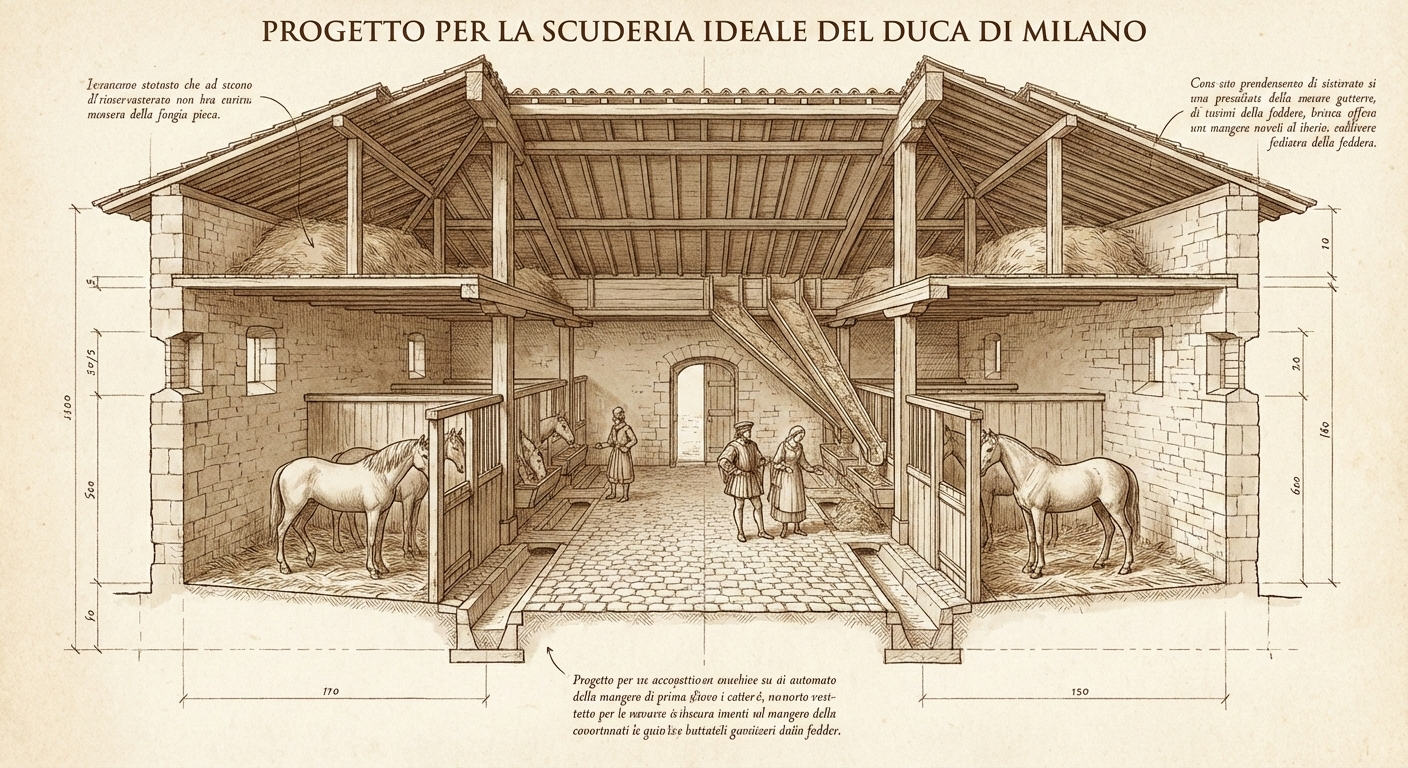
For the Duke of Milan, Leonardo designed a stable that was more like a high-tech factory for horses.
The Innovation: He loathed the smell and mess of traditional stables. His design featured automated feeding systems where hay was dropped from a loft directly into the mangers.
More importantly, the floors were slanted to drain urine into a lower level, ensuring the prize horses (and the Duke) never had to walk in muck. It was an early application of industrial hygiene to agriculture.
5. The Sforzesca
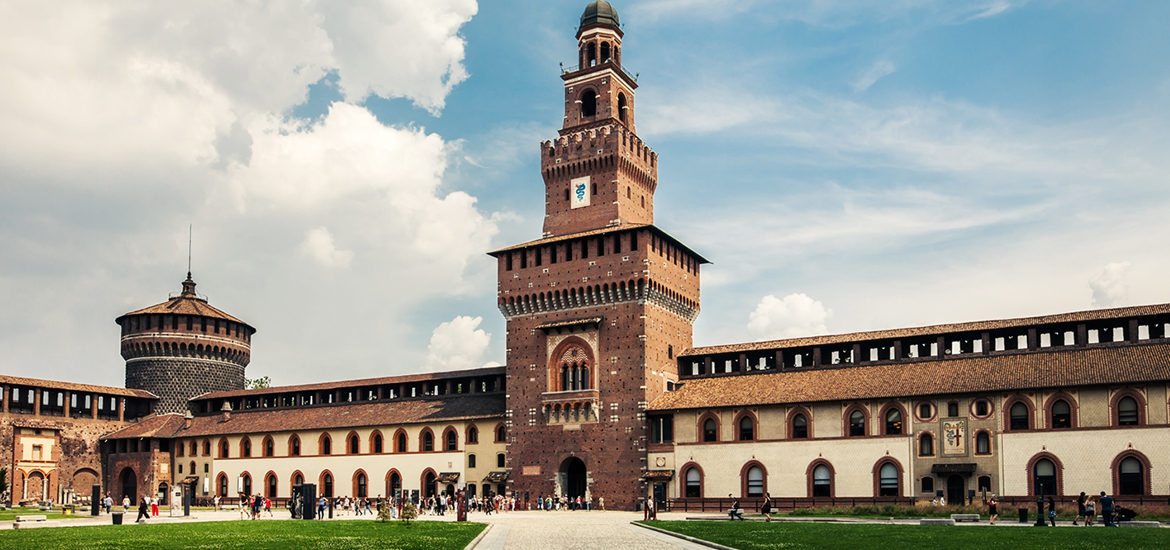
Near Vigevano, Leonardo consulted on the Sforzesca, a vast model farm and hunting lodge for Ludovico Sforza.
The Innovation: While the buildings were standard, the infrastructure was pure Leonardo. He designed a complex network of irrigation canals that used sluice gates to control water flow to the rice paddies and vineyards.
He treated the farm as a hydraulic machine, ensuring that waterthe engine of agriculturewas distributed with mathematical precision.
6. Villa Melzi At Vaprio D'Adda
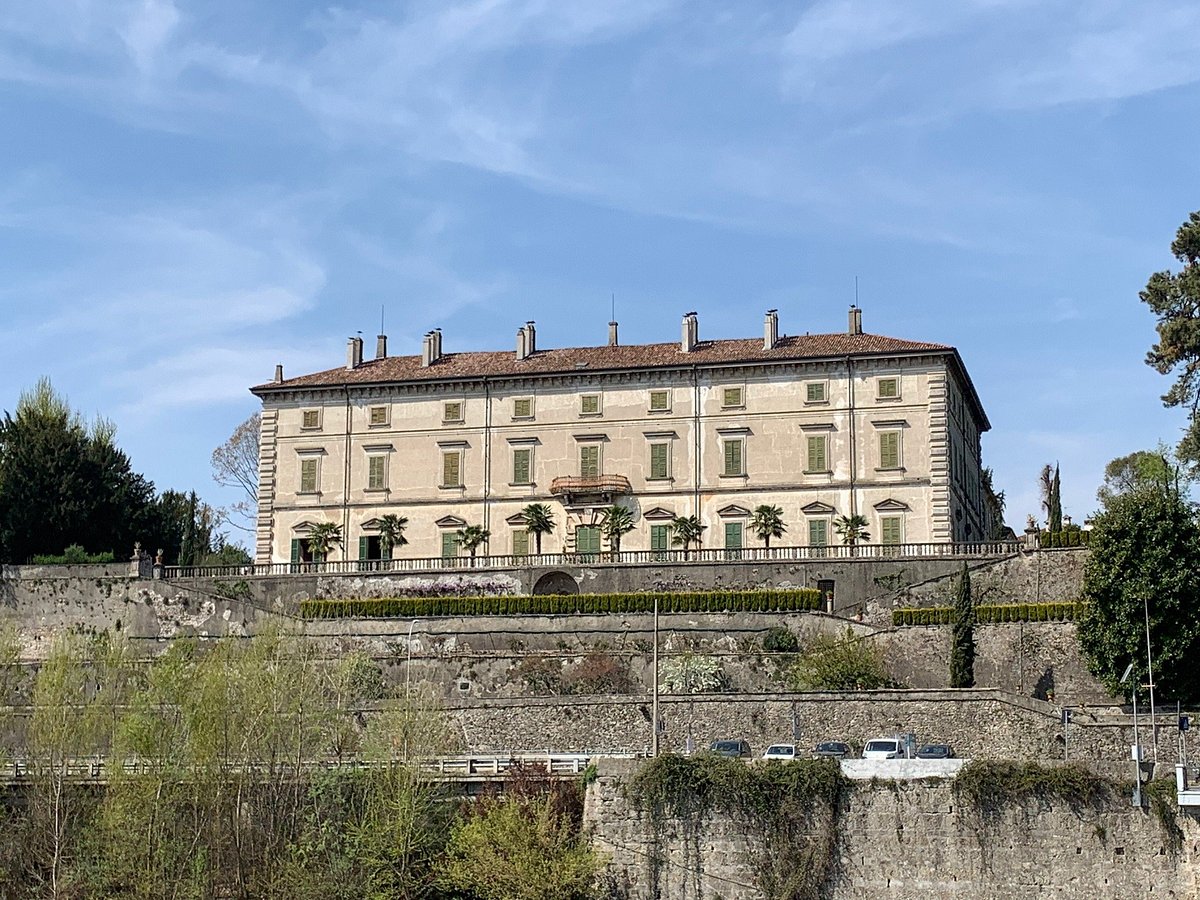
The Innovation: He is credited with the design of the villa's massive terraced gardens and the retaining walls that hold back the riverbank.
Sketches from this period show him redesigning the villa to include a belvedere and complex staircases, turning a country house into a landscape observation deck.
7. The Tiburio Of Milan Cathedral
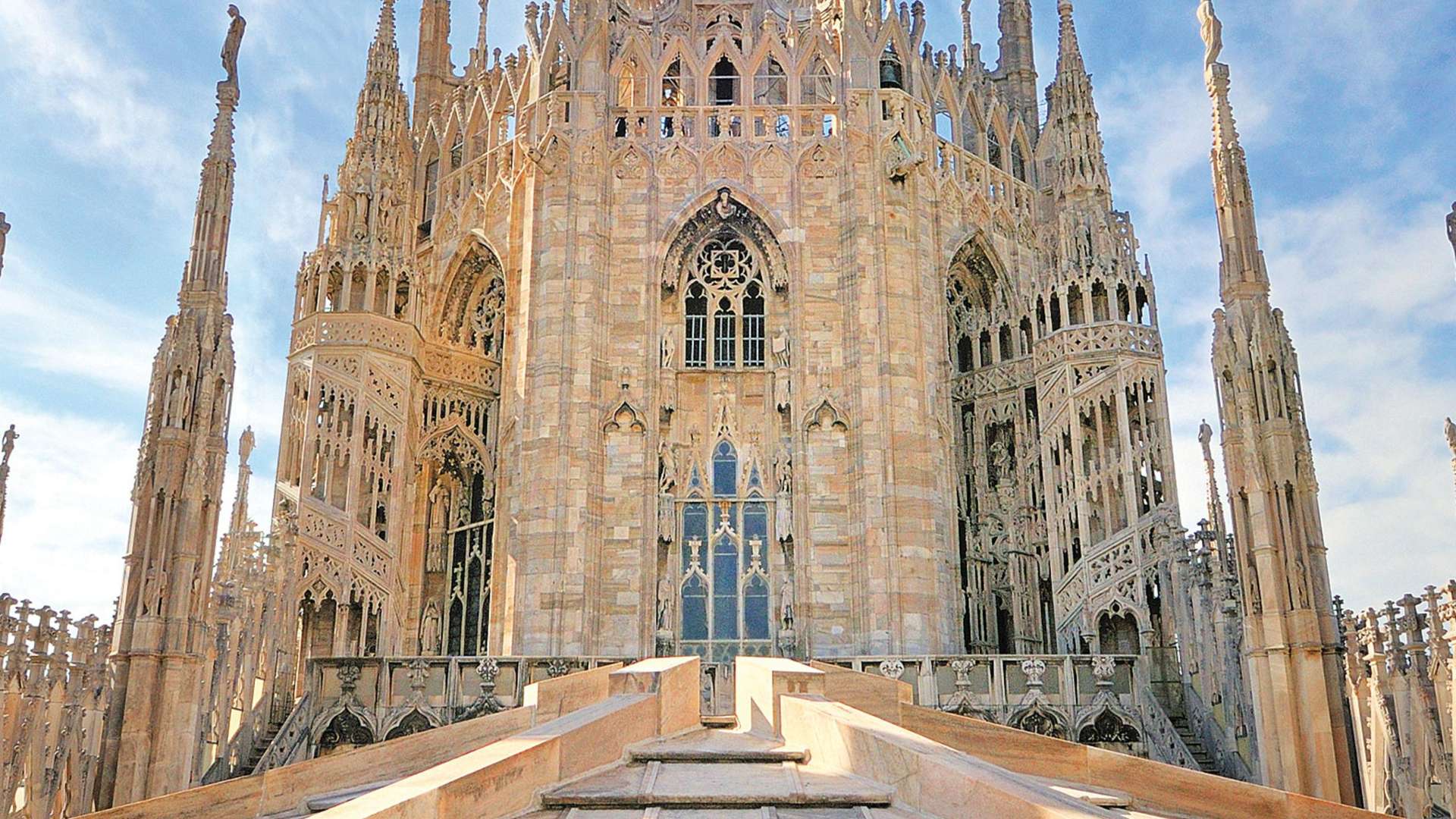
Leonardo submitted a model for the completion of the tiburio (crossing tower) of the Duomo di Milano.
The Innovation: He approached the problem medically. He diagnosed the cathedral as a sick patient, identifying that the Gothic pillars were being pushed outward by the weight of the dome.
His solution involved iron tie-rods and a double-shell dome structureideas that were rejected in favor of a more traditional design, but which anticipated the structural solutions used later at St. Paul’s in London.
8. Fortifications Of Piombino
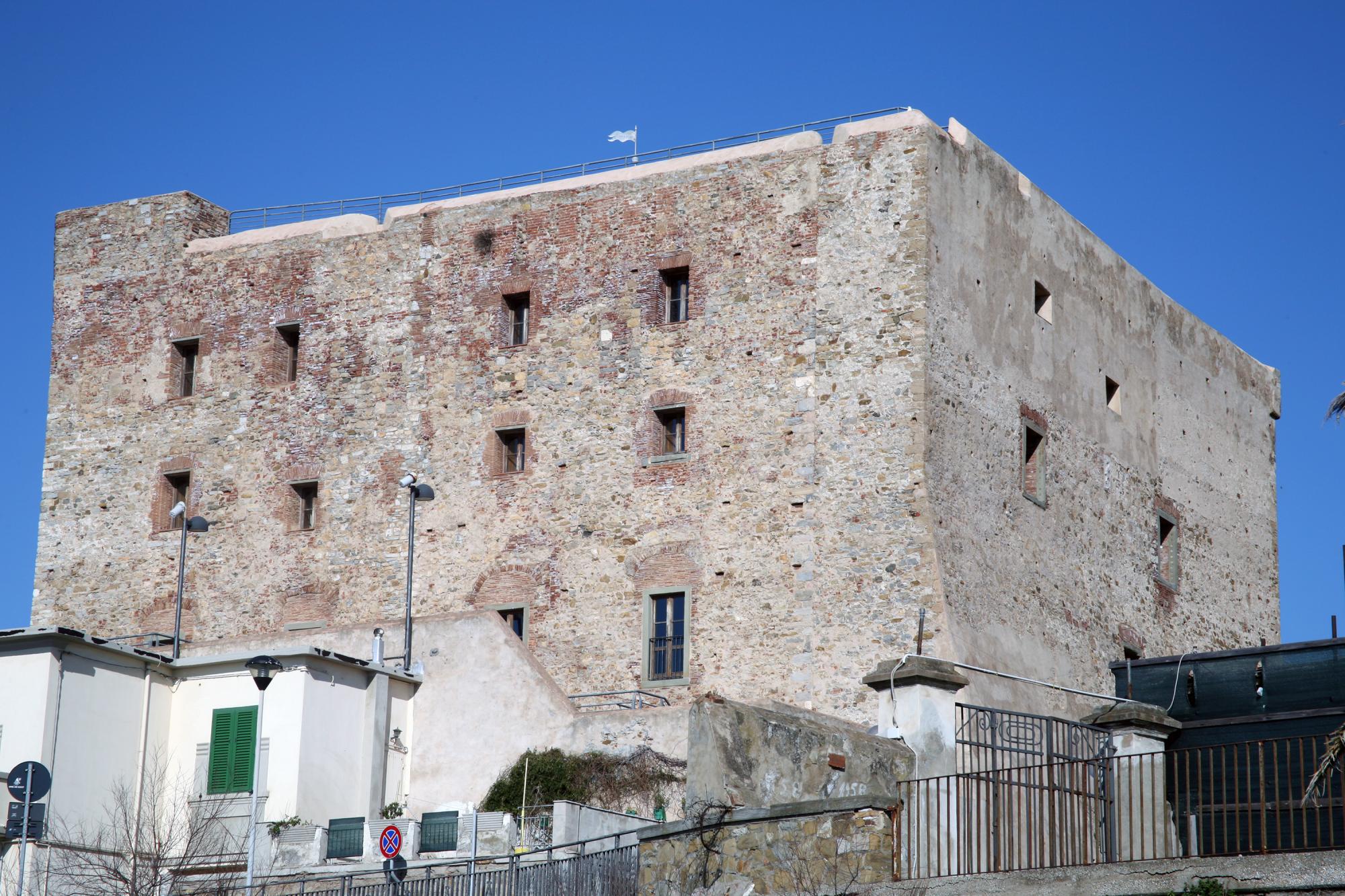
In 1504, Leonardo was sent by the Florentine government to inspect the defenses of the port city of Piombino.
The Innovation: He sketched a plan to overhaul the city walls, suggesting a system of tunnels allowing soldiers to move unseen between bastions.
He also proposed a massive tower to guard the harbor entrance, designing it with curved walls to deflect cannonballsa sharp departure from the square, vulnerable towers of the Middle Ages.
9. The Pavilion Of The Duchess
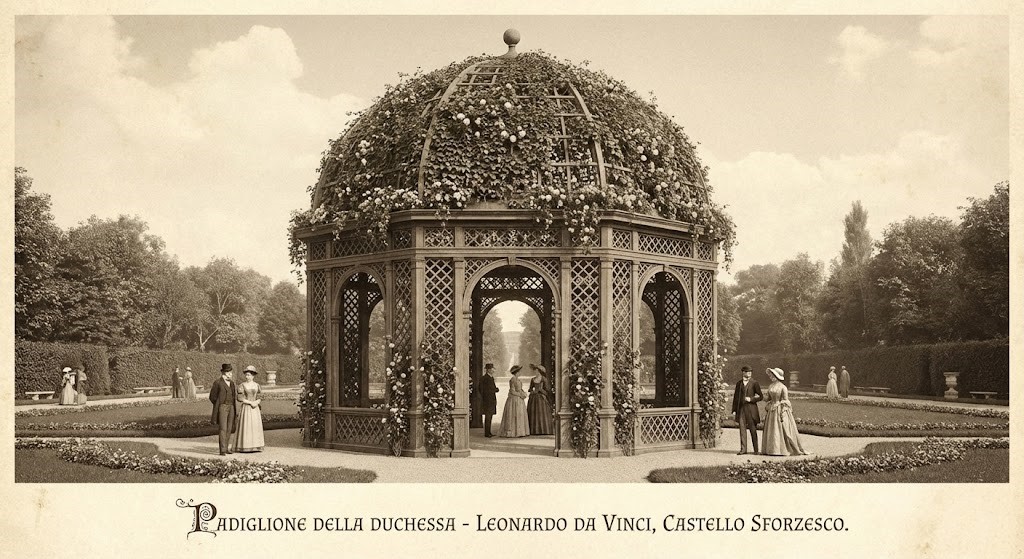
In the gardens of Castello Sforzesco, Leonardo designed a Pavilion of the Garden for Beatrice d'Este.
The Innovation: Though lost to time, descriptions and sketches suggest it was a masterpiece of ephemeral architecture.
It likely featured a domed trellis covered in living vegetation, with mechanical automatons and water features hidden inside. It bridged the gap between architecture and stage set, designed to create a momentary sense of wonder.
10. The Octagonal Churches
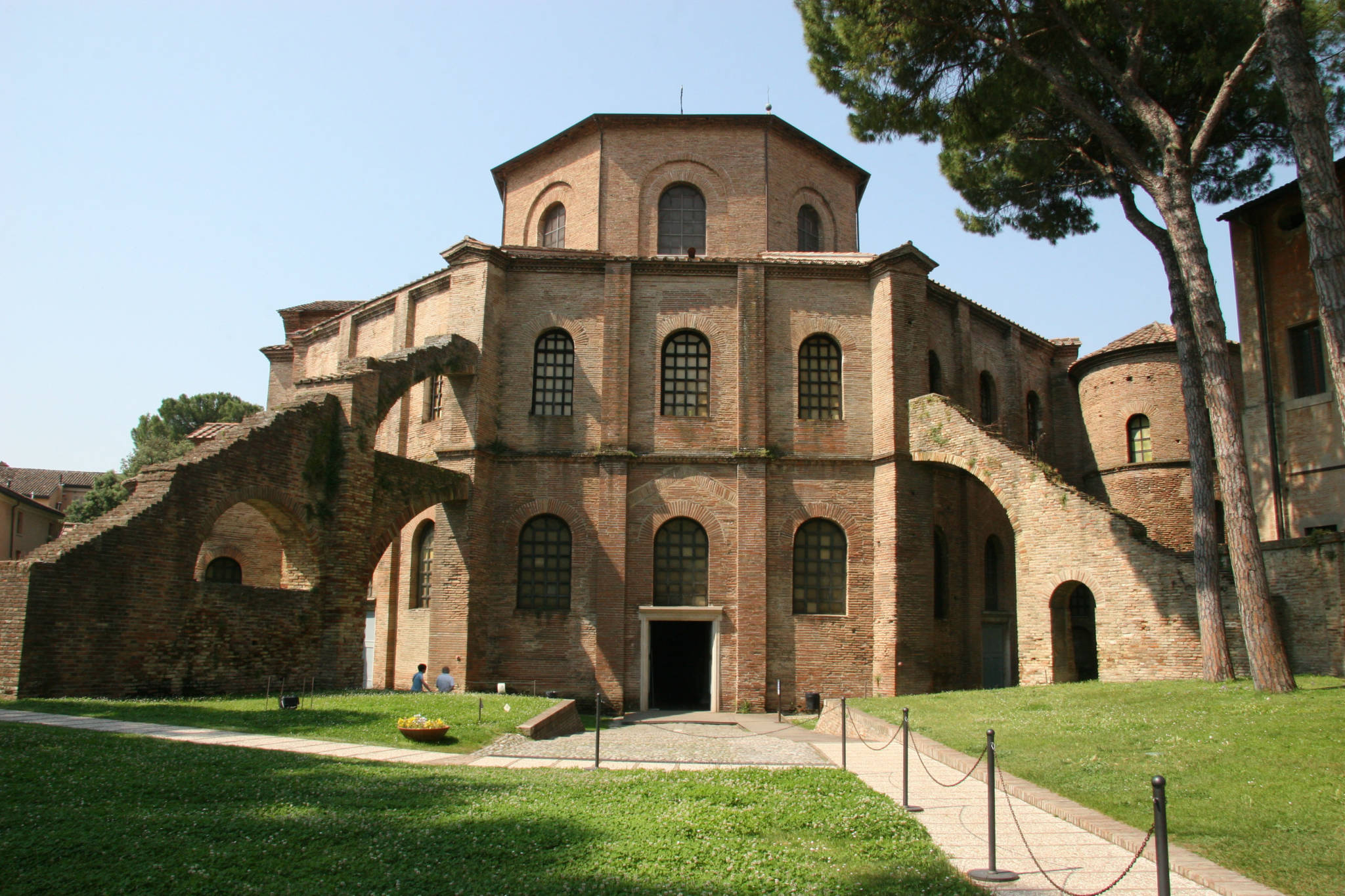
Scattered throughout Manuscript B are designs for perfect, centralized churches that were never intended for a specific site.
The Innovation: These sketches became the open-source code of the Renaissance. They explored the quincunx pattern (a central dome surrounded by four smaller domes).
While Leonardo never built one, his friend Bramante clearly used these sketches as the basis for Santa Maria delle Grazieand the initial plans for St. Peter's Basilica. Leonardo provided the DNA; others built the body.
The Leonardo Method: Adapting Renaissance Systems For Modern Practice
You’ll learn to look at your projects through Leonardo’s eyesnot as static monuments, but as living systemsusing his specific drawing and thinking techniques to unlock new solutions.
The Transferable Method: Iterate, Vary, Measure, Test Systems
Leonardo’s real gift to architects is a process discipline:
- draw to think,
- vary systematically,
- test systems (circulation/water/structure)
- keep geometry measurable even in 3D imagination.
Structured Element: Leonardo Concept → Modern Design Parallel
| Leonardo concept | Modern design parallel |
| Two-level streets in the Ideal City | Separate the public realm from logistics/back-of-house to protect the pedestrian experience. |
| Canals as freight/sanitation infrastructure | Treat water and waste as first-order constraints (stormwater, service routing, supply chains) |
| Central-plan church variations in Manuscript B | Use parametric/variant thinking to explore form families without losing coherence. |
| Plan + measurable bird’s-eye representation | Combine experiential visualization with dimensional clarity early in concept design. |
| Artillery-era fortification studies | Design with threat models: map vulnerabilities, lines of sight, and resilience strategies |
Also Check Out:Rock-cut Architecture
Frequently Asked Questions
What Architecture Did Leonardo Da Vinci Make?
Mostly architectural drawings and proposalsurban plans, churches, fortifications, and infrastructurerather than surviving completed buildings.
Did Da Vinci Build Any Buildings?
Major institutional summaries say there’s no proof of anything he built that survives today, even if commissions existed.
What Is Paper Architecture In Leonardo’s Case?
Architectural ideas preserved in notebooks and drawingsmeant to explore and communicate designwithout reliable evidence, they were constructed.
What Is Leonardo’s Ideal City?
A rigorously organized two-level city concept connecting transport and canals, separating circulation layers to manage movement and cleanliness.
Why Did Leonardo Design Two-Level Streets?
To separate different flowselite passage above, transport and goods belowreducing friction and coordinating movement with canals.
Where Are Leonardo’s Architectural Drawings Found?
In major collections like the Codex Atlanticus (Ambrosiana), the Institut de France notebooks (including Carnet B), and large drawing groups such as the Royal Collection.
What Is Manuscript B And Why Does It Matter?
Manuscript B (Carnet B) is a late-1480s notebook preserved at the Institut de France that includes significant architectural studies, including central-plan churches.
What Did Leonardo Contribute To Church Architecture?
He explored centrally planned churches through systematic geometric variations, often using a plan paired with a bird’s-eye view to keep designs measurable and spatial.
How Did Leonardo Draw Architecture Differently From Others?
He sometimes paired plan views with bird’s-eye/perspective representations, combining immediacy with measurable geometry rather than relying on a single façade elevation.
What Was Leonardo’s Role At Milan Cathedral?
He was involved in the 1487 competition for the cathedral’s tiburio, which scholars use to study the early modern design process and building-site administration.
Did Leonardo Design The Château De Chambord Staircase?
Some historians believe he did, but the safest framing is influence or attribution rather than certainty; even official language often points to spirit more than proof.
What Fortification Ideas Is Leonardo Known For?
He produced studies tied to military architecture and the art of fortification, especially in his Milanese period, reflecting artillery-era design problems.
How Is Architecture Connected To Leonardo’s Engineering?
His notebooks blur the boundary between buildings, infrastructure, and machines share the same logic, movement, and water systems perform together.
Where Can I View The Codex Atlanticus Online?
The Veneranda Biblioteca Ambrosiana hosts a Codex Atlanticus portal designed to explore Leonardo’s writings and drawings through interactive navigation.
Does Da Vinci Have Adhd?
A modern diagnosis can’t be confirmed historically; it’s more responsible to discuss documented working habits and the evidence of his notebooks than to label a condition.
Final Thoughts
Leonardo da Vinci’s architectural legacy is not measured in bricks and mortar, but in ideas. He was the first modern urban planner, the first to see the city as a complex system that requires zoning and sanitation, and the first to apply rigorous scientific analysis to structural loads.
When I look at modern mixed-use developments that separate commercial logistics from pedestrian plazas, I see the ghost of Leonardo’s Ideal City.
He taught us that architecture is not just about sheltering the body, but about sustaining the social and biological life of the human being. He designed for a future that wouldn't arrive for centuries, proving that while stone may crumble, a perfect idea is indestructible.
Jump to
Leonardo Da Vinci Architecture: How To Read His Sketches Like An Architect
Key Takeaways: The Da Vinci Architectural Signature
The Ideal City: Urban Planning Meets Human Health
Sacred Geometry: The Centralized Church Designs
The Chambord Connection: The Double-Helix Staircase
Engineering The Structure: Studies On Friction And Load
The Leonardo Portfolio: 10 Masterworks Of The Built & Unbuilt
The Leonardo Method: Adapting Renaissance Systems For Modern Practice
Frequently Asked Questions
Final Thoughts

George Evans
Author
George Anderson, an exceptional architectural designer, envisions and brings to life structures that transcend the realm of imagination. With an unwavering passion for design and an innate eye for detail, George seamlessly blends form and function, creating immersive spaces that inspire awe.
Driven by a deep appreciation for the interplay of space, light, and materials, George's innovative approach redefines the possibilities of architectural design. His visionary compositions leave an indelible mark, evoking a sense of wonder and transforming the built environment.
George Anderson's transformative designs and unwavering dedication continue to shape the architectural landscape, pushing the boundaries of what is possible and inspiring generations to come.
Latest Articles
Popular Articles